
The Fundamentals of Visual Storytelling
The Importance of Body Language and Expressions
Facial expressions and character posture are your main tools for conveying emotions and intentions. A glance, a faint smile, a slumped shoulder can say a lot without a word. Work on subtlety to make your characters believable and endearing.
Composition and Framing to Guide the Eye
Use the composition of your panels to direct the reader's eye. Framing (close-up, wide shot, etc.) and the arrangement of elements (characters, settings) create a visual path that highlights key moments in your story.
Panel Pacing: Creating the Tempo of Action and Emotion
The size and succession of panels determine the reading pace. Fast, dynamic panels for action, slower, more spacious panels for moments of introspection or tension. This is a powerful lever for reader immersion.
The Use of Symbols and Visual Metaphors
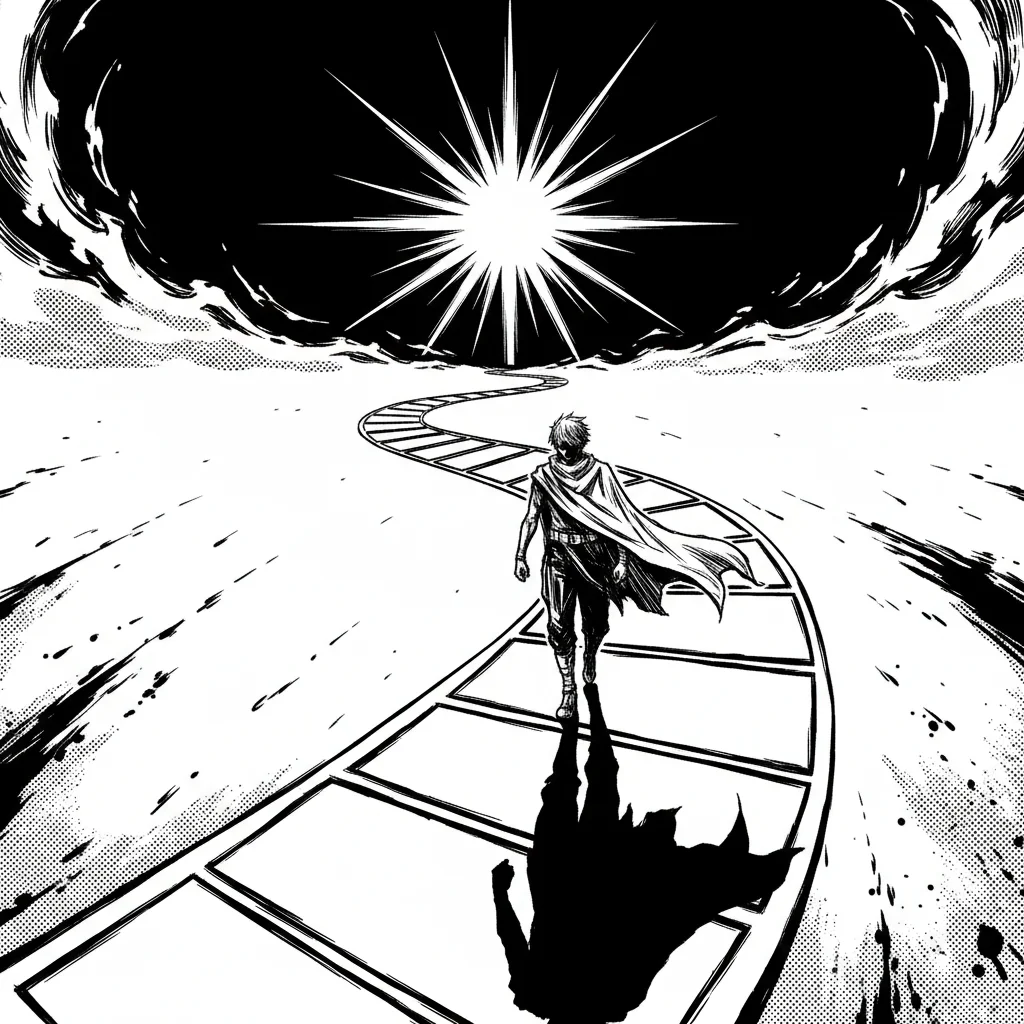
Symbols can enrich your storytelling by adding layers of meaning. A recurring object, a particular color, a set element can become powerful visual metaphors to reinforce your message.
Structure Your Visual Narrative
Learn how to organize your ideas and plan your panels for impactful storytelling without dialogue.
Discover the ToolsComparison of Visual Narrative Approaches
Which technique to choose for your story?
Comparing different techniques for telling a story without words is essential for choosing the method best suited to your project.
| Approach | Description | Advantages | Disadvantages |
|---|---|---|---|
| Sequential storytelling | Chronological unfolding of events through a logical succession of panels. | Clarity, ease of understanding. | Can lack dynamism if not managed well. |
| Contrast storytelling | Juxtaposition of two situations or emotions to create impact. | Strong emotional charge, invites reflection. | Requires great mastery of symbolism. |
| Focus storytelling | Concentration on a detail or character to reveal the plot. | Creates suspense, highlights key elements. | Risk of losing the reader if the focus is not clear. |
| Abstract storytelling | Use of graphic elements to evoke sensations or ideas. | Originality, high artistic potential. | Can be difficult for the general public to access. |
Refine Your Graphic Style
Explore techniques to improve the composition, framing, and rhythm of your panels.
Explore TechniquesTools and Techniques for Your Silent Panels
- Storyboard
- Quick sketches of different panels to plan the sequence and visual rhythm. This is a key step to visualize how to tell your story without dialogue.
- Preparatory Sketches
- Work on expressions, poses, and settings to refine the visual rendering and ensure narrative clarity.
- Visual References
- Use of photos or other works for inspiration on moods, styles, or emotions, to enhance visual impact.
- Iterations
- Successive trials of different layouts and graphic styles to find the best narrative expression and optimize visual communication.
- Graphic Consistency
- Maintaining a uniform visual style across all pages for total immersion and a strong identity.
- Readability Tests
- Testing with readers to ensure the story is understandable without any explanatory text.
Get Serious About Creation
Discover how innovative solutions can help you bring your manga series project to life.
Learn More About Bulle.aiConclusion
Mastering the art of silent panels is a valuable skill for any manga creator. By focusing on visual storytelling, you can connect with your audience in a unique and powerful way. Keep experimenting and developing your own style to create your manga. To go further in creating your series, discover how innovative tools can support you in your creative process.