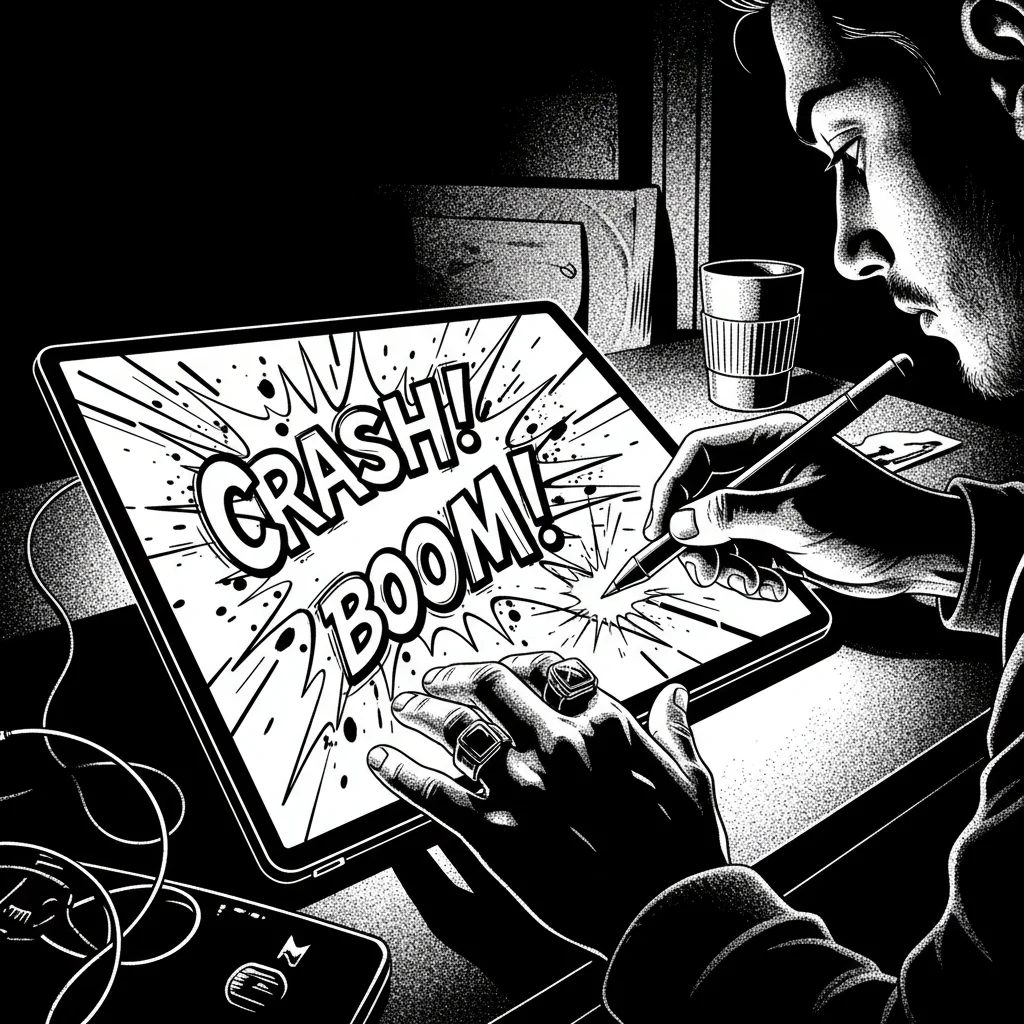

The Essence of Onomatopoeia in Manga
The Expressive Function of Sounds
Onomatopoeia goes beyond simple sound imitation. It conveys emotions, sensations, and contributes to the overall atmosphere of the scene. A cry, a bang, a whisper – each sound must be chosen for its psychological impact on the reader.
Diversity and Originality of Onomatopoeia
Japanese manga has developed an incredibly rich and varied repertoire of onomatopoeia, often very different from Western conventions. Exploring this diversity allows for the enrichment of one's own creative palette and the discovery of unique expressions for each situation.
Visual Integration: More Than Just Text
The way an onomatopoeia is drawn – its typography, size, color, integration into the artwork – is as important as the sound it represents. It must dialogue with the image for maximum effect.

Bring Your Sounds to Life
Learn to choose and draw onomatopoeia that strike a chord and enhance your story. Explore techniques for maximum impact.
Discover the TechniquesCreating Impactful Onomatopoeia
Choosing the Right Sound
The selection of the appropriate onomatopoeia depends on the context. Is it a sharp, abrupt noise, a soft, discreet sound, or a cacophony? The goal is to find the word that best evokes the imagined sound reality.
It is essential to consider the intensity and nature of the sound to choose the most evocative onomatopoeia. An explosion will not be rendered by the same sound as a whisper. This careful selection directly contributes to the quality of your project when you decide to create your manga.
Adapting the Graphic Style to the Sound
The shape of the onomatopoeia should reflect its intensity and nature. Angular letters for a violent noise, soft curves for a more subtle sound. Typography becomes a tool of expression in its own right.
The font, its size, and its orientation contribute to the visual and auditory impact of the onomatopoeia. These graphic choices reinforce the visual identity of your work and facilitate the reader's immersion.
Optimize Your Panels
Master the visual integration and positioning of onomatopoeia for fluid and dynamic reading.
Improve Your ReadabilityOptimizing the Use of Onomatopoeia for Readability
Step 1 — Analyze the Scene
Before choosing or creating a sound effect, understand the main action, the dominant emotion, and the overall mood of the panel. Which sound is most relevant to support these elements?
Step 2 — Choose the Right Typography
Select or create a font that matches the energy of the sound. Bold, aggressive fonts for strong impacts, thinner, lighter fonts for subtle noises.
Step 3 — Position the Sound Effect Strategically
The placement of the sound effect on the panel is crucial. It should draw the eye without hindering the reading of the panels or characters. Consider the direction of the reader's gaze.
Step 4 — Use Color Sparingly
Color can accentuate the impact of a sound effect, but its use should be thoughtful. A bright color for an explosive sound, a more muted hue for background noise.
Step 5 — Test and Adjust
Once the sound effect is integrated, reread your panel. Is the sound clear? Does it enhance the action? Don't hesitate to adjust the size, shape, or position for optimal impact.

Get Serious About Creation
Ready to structure your manga series project? Discover tools to guide you through every stage of creation.
Explore the ToolsConclusion
Onomatopoeia are a powerful lever for bringing your manga to life. By mastering their creation, visual integration, and strategic placement, you enrich the reading experience and strengthen the narrative power of your panels. Remember that experimentation is key: dare to explore, test, and innovate to find the sounds that will make your readers vibrate and transform your ideas into memorable works. To go further in your manga creation and optimize every detail, discover tools designed for authors.