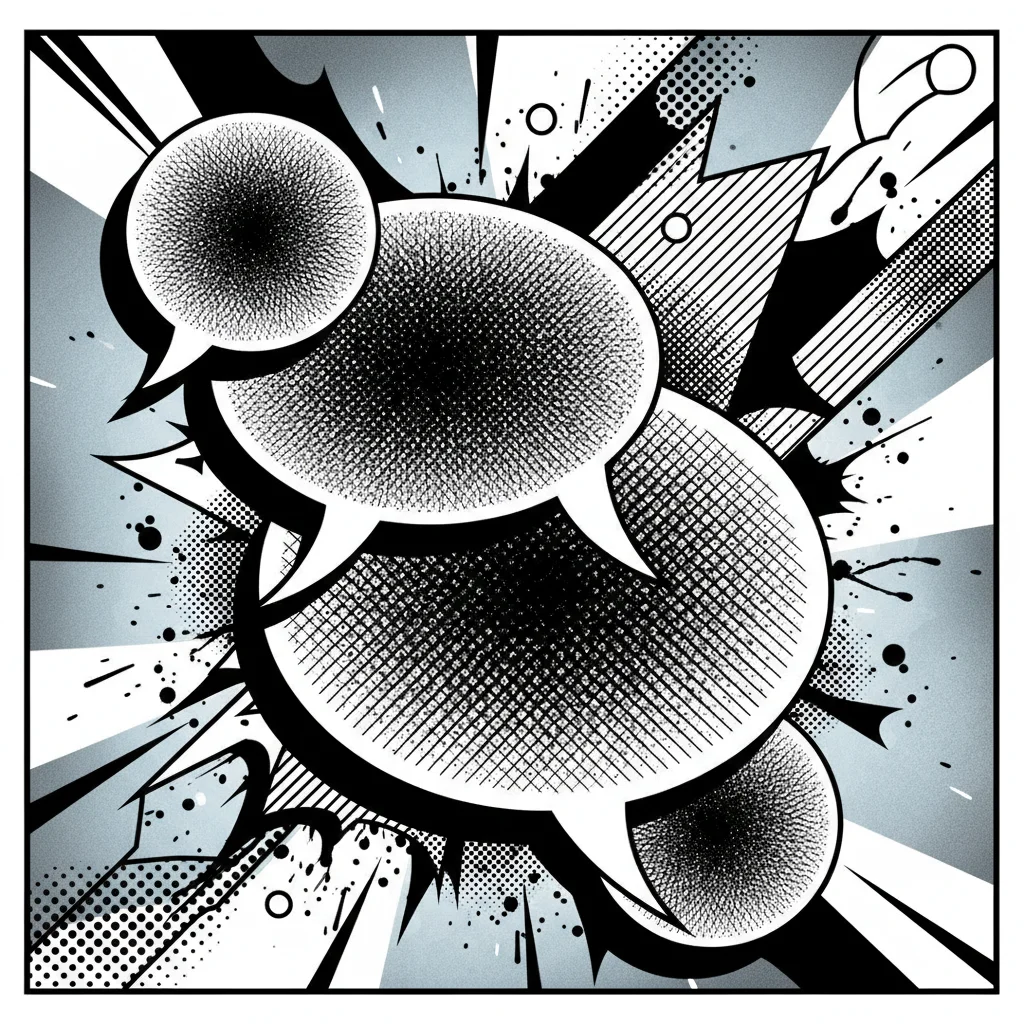

The Illusion of Fullness: When Too Many Bubbles Harm Impact
The Trap of Text Overload
A manga panel overloaded with speech bubbles can quickly become indigestible. The reader feels overwhelmed by an excessive amount of information, which dilutes the impact of important dialogues and can even create a sense of confusion. The abundance of text often masks the richness of the drawing and the subtlety of the characters' facial expressions, elements that are fundamental in visual storytelling.
The Importance of Silence and White Space
Conversely, white space and moments of narrative silence are powerful tools. They allow the reader to breathe, to reflect on what has just been said or shown, and to appreciate the quality of the drawing. White space can accentuate an emotion, highlight a gaze, or simply give the reader time to absorb the atmosphere of a scene. It is in these moments of respite that manga reveals its full depth.
How Speech Bubbles Guide the Reader's Eye
The placement and size of speech bubbles are essential for directing the reading flow. A well-placed bubble draws the eye to the character speaking or to the key element of the scene. By varying their size and shape, one can subtly indicate the importance of the dialogue, the tone of voice, or even the character's state of mind. Thoughtful management of speech bubbles transforms reading into a fluid and immersive experience.
Optimize Your Pages
Learn to master the art of bubbles for maximum narrative and visual impact.
Discover the TechniquesKey Steps for Effective Bubble Usage
Step 1 — Define the function of each speech bubble
Before placing a speech bubble, determine its role: main dialogue, inner thought, ambient sound, or off-panel narration. This clarification will guide its shape, size, and placement for optimal communication.
Step 2 — Prioritize essential text
Every word counts. Eliminate superfluous dialogue that adds nothing to the plot or character development. Concise text is often more impactful and easier to read.
Step 3 — Adapt the bubble shape to the content
Use the diversity of bubble shapes (classic, thought, shout, etc.) to enrich the storytelling. An adapted shape reinforces the meaning of the text and the style of your manga.
Step 4 — Integrate bubbles into the overall composition
Speech bubbles are not independent of the drawing. They must harmonize with the characters, backgrounds, and the panel's leading lines to form a coherent and aesthetic whole.
Step 5 — Play with bubble size and density
The size of a bubble can suggest the volume of the voice or the importance of the information. Controlled text density avoids overload and maintains visual balance.
Structure Your Project
Ready to take it to the next level? Discover tools to help you bring your manga series to life.
Explore SolutionsEvaluating and Optimizing Your Bubble Readability
To ensure an enjoyable and effective reading experience, several readability criteria must be carefully considered when creating your manga pages.
| Readability Criterion | Detail and impact on the reader |
|---|---|
| Font Size | A font that is too small will make reading tedious, especially on a small screen. Ensure it is comfortable for the reader. |
| Letter Spacing (Kerning) | Kerning that is too tight or too loose can hinder reading fluency. Find the right balance for optimal clarity. |
| Font Type | Choose a legible font that suits the style of your manga. Avoid fancy fonts that sacrifice clarity. |
| Text/Bubble Contrast | Insufficient contrast will make the text difficult to decipher. Ensure the text stands out clearly against the bubble background. |
| Bubble Placement | Bubbles should never obscure important visual elements or a character's face during a key expression. |
| Reading Order | The arrangement of bubbles should naturally guide the reader's eye across the page, following the narrative flow. |
Improve Your Productivity
Gain efficiency in your manga creation with proven practices.
Tips for CreatorsConclusion
Mastering the art of speech bubbles goes far beyond their mere presence on the page. It is a compositional strategy that, when applied with discernment, strengthens the narrative and visual impact of your manga. By avoiding the temptation to fill every space, you open the door to a more engaging and emotionally resonant reading experience. Explore these principles to refine your art and create a powerful and memorable manga.