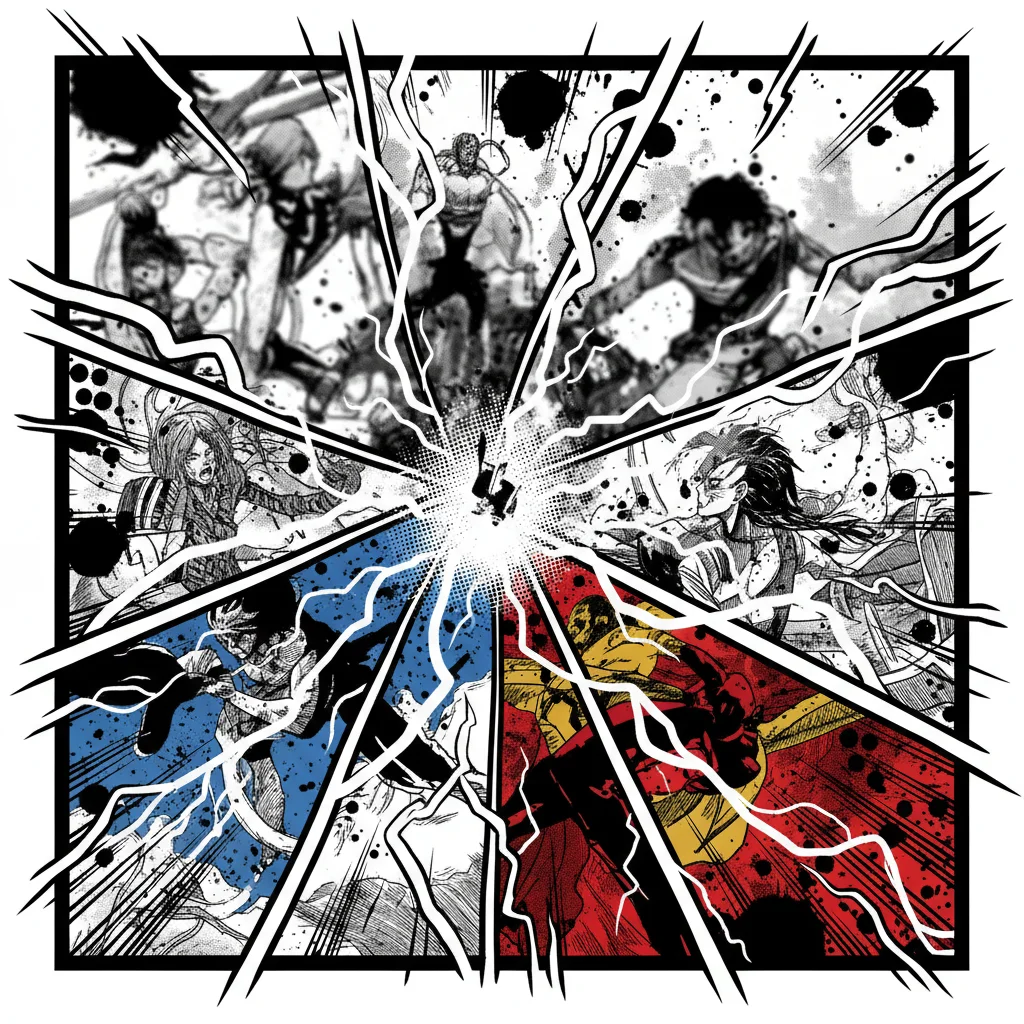

Identifying Friction Points in Arc Transitions
The Risk of Thematic or Tonal Inconsistency
Radically changing tone or themes without preparation can disorient the reader and give the impression of a disjointed story. It is essential to maintain a guiding principle, even when changing settings or atmosphere.
The Pitfall of Excessive or Insufficient Narrative Decompression
After an intense arc, a period of calm is necessary, but if it's too long, it can become tiresome. Conversely, too rapid a transition to the next action can leave the reader wanting more, without having had time to process the previous events.
The Difficulty of Introducing New Stakes Without Abandoning Old Ones
It is tempting to want to introduce new elements, but care must be taken to ensure that previously established narrative threads find a satisfactory conclusion, or at least a logical explanation for their suspension.
The Impact on the Perception of Characters and Their Motivations
Characters must evolve credibly. Poorly managed transitions can alter the perception of their motivations or development, harming reader engagement.
Ready to Structure Your Narrative
Discover how solid planning can transform your ideas into a captivating series.
Optimize Your TransitionsStrategies for Successful Arc Transitions
A smooth transition between two story arcs is essential to maintain reader engagement. Here are the key steps to achieve this and thus better create your manga:
- Review of previous arcs: Ensure that the concluded arcs have had sufficient impact and that the resolutions provided are satisfactory for the reader.
- Initiate new themes: Subtly introduce new themes or a new tone from the end of the previous arc, in small touches.
- Create organic links: Establish clear connections between past events and new stakes, even if the latter seem distinct.
- Develop characters: Use the transition to evolve your characters, showing how past experiences influence their future reactions.
- Manage pacing: Adjust the narrative pacing to allow the reader to digest the conclusions while being eager to discover what comes next.
- Prepare the ground for new antagonists or challenges: Introduce hints or threats that foreshadow upcoming conflicts.
- Maintain tension: Even in the calmer moments of transition, maintain an underlying tension that keeps the reader turning pages.
Simplify Your Creative Process
Explore tools to help you manage the complexity of your story arcs and maintain consistency.
Discover SolutionsThe Importance of Anticipation and Preparation
A successful narrative transition is not improvised; it is prepared well in advance. Rigorous planning is key to ensuring the coherence and fluidity of your story.
A successful transition is often one that is not perceived as such by the reader, as it integrates naturally into the overall progression of the story.
It is crucial not to underestimate the upstream planning work. Thinking about future arcs from the conception of present arcs helps avoid inconsistencies and build a more solid and coherent work in the long term. This is a fundamental aspect for anyone who wishes to create their manga.
Anticipation allows for sowing seeds that will sprout later, reinforcing the feeling of a living and interconnected universe.
The author's mental and structural preparation is therefore a fundamental pillar for successfully navigating between the different phases of their story.
Take It to the Next Level
As your project takes shape, smart tools can help you iterate and finalize your pages.
Explore AI ToolsConclusion
Mastering transitions between story arcs is an art that requires both a big-picture vision and meticulous attention to detail. By anticipating friction points, carefully preparing the transition, and ensuring thematic and emotional consistency, authors can not only maintain reader engagement but also enrich the reading experience. A successful transition solidifies the work's structure and strengthens the bond between the creator and their audience, paving the way for new captivating adventures and facilitating the creation of your manga.