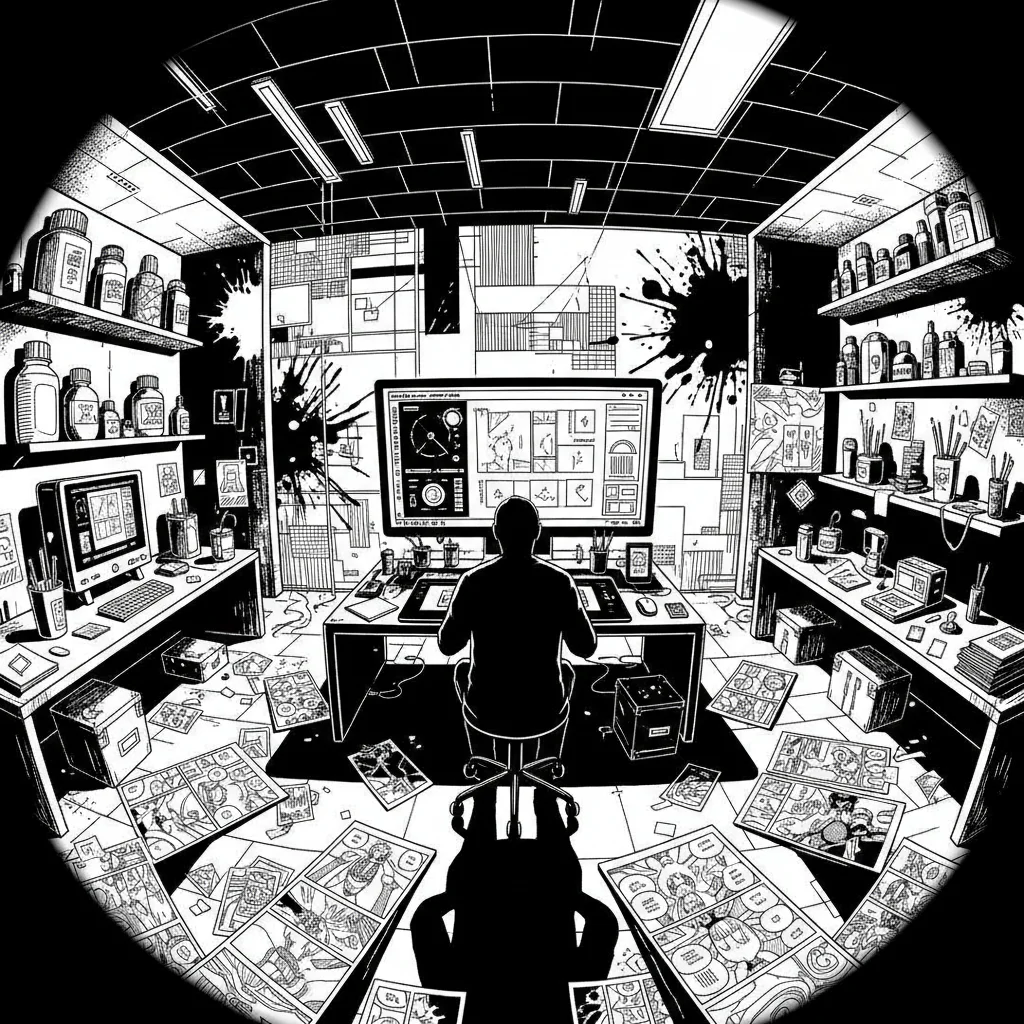

Layout: An Evolving Process, Not a Fixed One
Understanding the Intent Behind the Layout
Layout is not just a graphic arrangement; it serves to convey rhythm, emotion, and information to the reader. It is a direct reflection of narrative intentions. Creators must constantly ask themselves what is the best way to guide the reader's eye and mind through each sequence.
Reasons for a Layout Revision
Several factors may necessitate a revision: a better understanding of the rhythm during creation, script adjustments, or a desire to improve clarity for the reader. Sometimes, a new idea emerges during creation that requires adapting the initial layout to be fully exploited.
The Impact of a Well-Executed Revision
A timely change can prevent more serious downstream problems, such as scenes falling flat or narrative confusion, making the overall production more efficient. A good adaptation of the layout, even if late, can therefore save time and improve quality for the author.
Optimize Your Layout
Discover how intelligent adaptation of your panel layout can accelerate your creative process and improve the quality of your manga.
Learn More About CreationKey Steps to Effectively Adapt Your Layout
Changing your panel layout might seem daunting, but by following a structured approach, it's possible to optimize this process to gain efficiency rather than lose it. Here are the essential steps for a successful adaptation in manga creation.
- Precisely identify the panels or sequences requiring revision based on reading aloud or feedback from a beta reader.
- Analyze the objective of each problematic panel: what information or emotion should it convey?
- Explore different layout options for these panels: changing size, angle, number of panels per page, or deleting and adding panels.
- Verify the consistency of the visual and narrative flow after each modification, ensuring that transitions remain smooth.
- Test the new layout on a short sequence to evaluate its impact on pacing and comprehension.
- Validate changes that significantly improve readability without introducing new complexities.
- Document the changes made to maintain consistency throughout the entire work.
Speed Up Your Production
Use the right methods and appropriate tools to make your layout work more efficient and save time.
Discover TipsTools and Tips for Optimized Manga Production
- Visual Rhythm
- The art of varying the size and shape of panels to control the speed at which the reader moves through the page. Smaller, numerous panels speed up the pace, while large panels slow it down.
- Panel Transitions
- The way one panel leads to the next. A good transition ensures smooth and logical reading, avoiding abrupt breaks.
- Page Composition
- The overall arrangement of panels on a page. Thoughtful composition guides the reader's eye and enhances narrative impact.
- Rapid Iteration
- The ability to quickly test different versions of a storyboard using digital tools, allowing for experimentation without excessive time constraints when creating one's manga.
- Graphic Consistency
- Maintaining a uniform visual style across all panels and pages, which includes consistency in drawing and layout.
Take It to the Next Level
Ready to seriously structure your manga project? Explore solutions to bring your pages to life.
Explore ToolsConclusion
Far from slowing down production, a thoughtful adaptation of panel layout can prove to be a lever for efficiency and quality for your manga. By considering the layout as a dynamic element, open to necessary adjustments to best serve your story, you transform a potential bottleneck into an opportunity for improvement. Modern tools are there to support you in this endeavor, allowing you to iterate and optimize your work without fear of losing the thread of your project. Embrace the evolution of your layout to create a more impactful work and a smoother production.