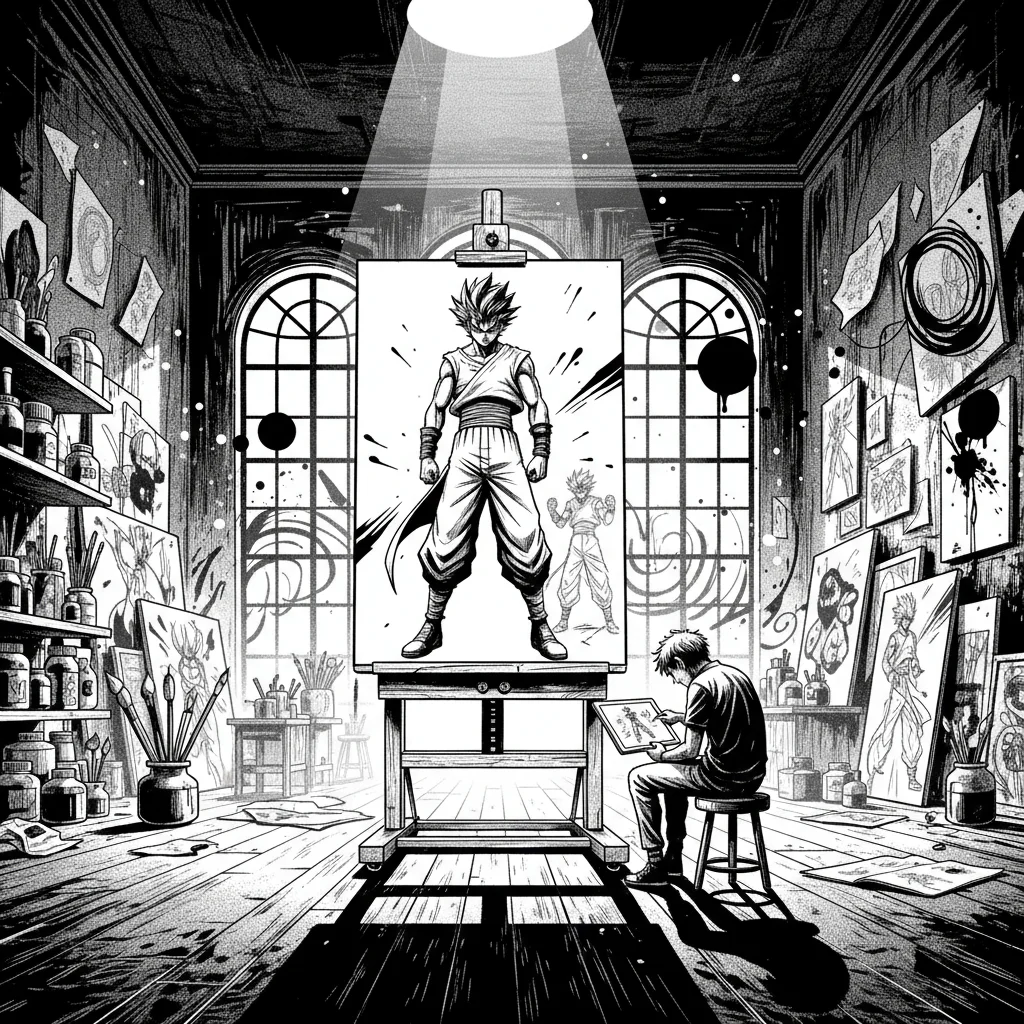

The Foundations of Consistent Morphology
The Importance of the Base Silhouette
Defining a unique silhouette for each character is the first step. Use quick sketches to explore shapes and find a strong visual identity. This solid foundation will help maintain character recognition even in dynamic situations.
Key Anatomical Proportions
Understanding the standard ratios of the human body (head, torso, limbs) is fundamental. Adapt these ratios to the manga style while maintaining internal logic. A good understanding of anatomy, even stylized, ensures credibility.
The Character Construction Grid
Set up a reference grid for height and span. Use consistent landmarks like the eye line, shoulders, and hips to ensure proportional stability across panels.
The Role of Accessories and Clothing
Clothing can mask or accentuate proportions. Ensure that clothes respect the character's base silhouette and do not create visual inconsistencies. Maintain silhouette consistency even under costume.
Structure Your Characters
Define a unique silhouette and consistent proportions for each character in your manga. Discover our tools.
Discover Our ToolsIdentifying and Correcting Morphological Inconsistencies
When do proportions betray the character?
Morphological inconsistencies can harm the credibility of your story. It is crucial to know how to spot and correct them quickly to create a convincing manga.
Is the head too big for the body?
A head that is disproportionate to the body is a common mistake, especially in very expressive manga styles. Always check the head-to-body ratio according to your adopted style.
Are the limbs lacking in length or volume?
Arms or legs that are too short or too thin compared to the torso can make a character unconvincing. Ensure that the limbs have appropriate length and volume for the overall morphology.
Is the torso disproportionate to the legs?
An imbalance between the upper and lower body can create an impression of awkwardness. Check the length of the torso and legs for optimal visual harmony.
The impact of pose changes on morphology?
Dynamic poses can distort proportions. It is important to ensure that the character's structure remains understandable and consistent despite contortions and expressive movements.
How do perspective errors distort proportions?
Poor perspective management can lead to distortions that make character proportions inconsistent. A good mastery of perspective is essential to avoid these visual pitfalls.
Avoid Common Mistakes
Learn to identify and correct morphological inconsistencies that can harm the credibility of your creations. Pro tips.
Pro TipsMaintaining Visual Consistency Over Time
- Visual Documentation
- Create detailed character sheets including different angle views and proportion examples in various situations. This serves as a constant reference for you and your creative team.
- Use of Assistance Tools
- Software and applications can help verify proportions and visual consistency. They offer grids and templates to assist the creative process in your manga project.
- Iterations and Feedback
- Don't hesitate to iterate on your character designs. Seek feedback from other artists or your audience to identify areas for improvement and refine your creations.
- Stylistic Consistency
- Beyond morphology, ensure the overall graphic style remains consistent. This contributes to the overall visual identity of your manga series and strengthens recognition.
- Series Planning
- Anticipate your series' needs in terms of character variations (age, injuries, transformations). Plan how to maintain consistency despite these necessary narrative changes.
- Systematic Review
- Establish a regular visual review process to detect morphological drift before it becomes problematic for the continuity of your story.
Maintaining visual consistency is an ongoing task that requires attention and method. Using appropriate tools can greatly facilitate this essential task for the quality of your manga.
Take It to the Next Level
Use specialized tools to ensure the visual consistency of your characters in the long term. Explore Bulle.ai.
Explore Bulle.aiConclusion
Ensuring the morphological consistency of your characters is a mark of professionalism and a key element for lasting reader engagement. By applying these principles, you lay a solid foundation for creating quality manga. Remember that well-defined and visually stable characters are essential for building a credible and immersive world. Mastering these techniques will allow you to develop your own style while respecting the fundamental codes of manga morphology.