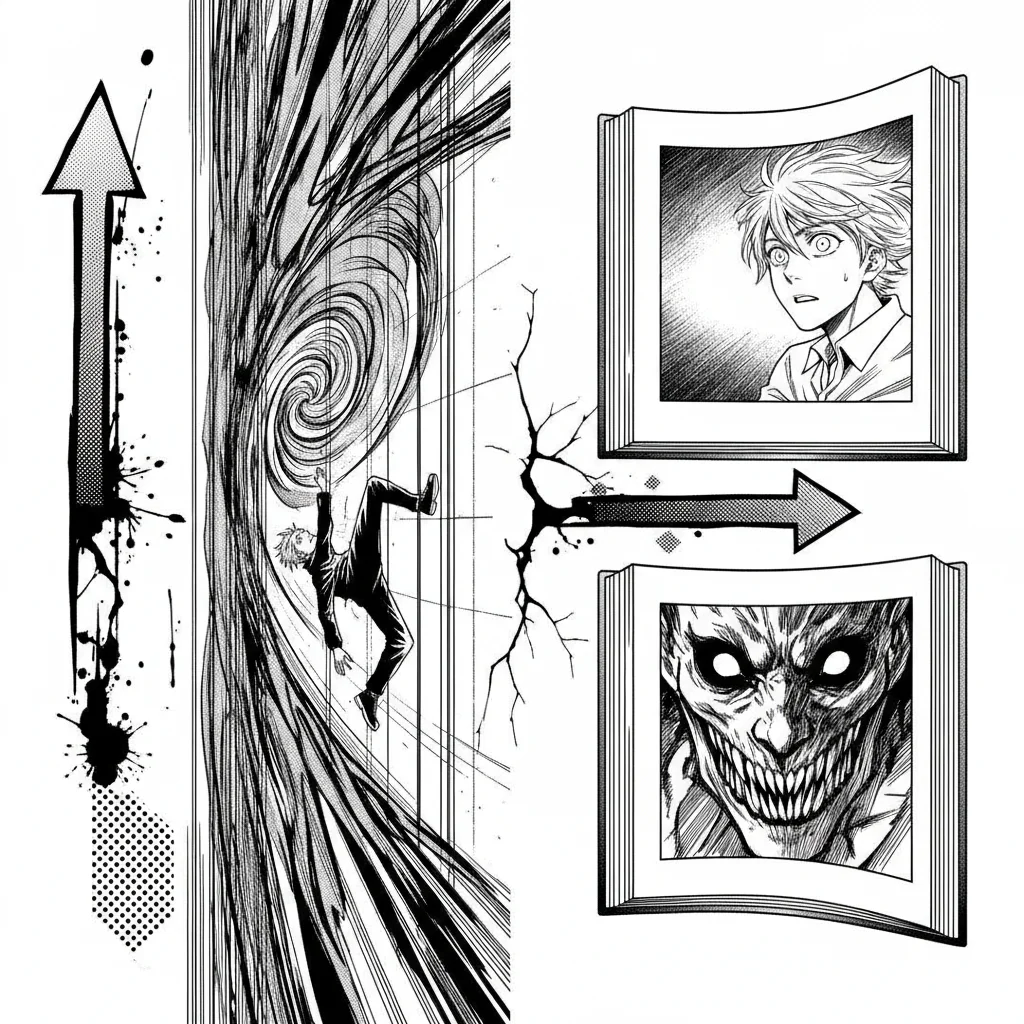

Manga Layout Fundamentals
The Essence of Pacing: Guiding the Eye
Pacing is not just about panels; it's the art of directing the reader's eye, creating rhythm, and evoking emotions. We will break down the fundamental principles that underpin good pacing, regardless of the medium.
Key Elements of a Successful Page
- Panel Composition: How each vignette contributes to the whole.
- Rhythm and Flow: The importance of transitions between panels.
- Whitespace Management: The impact of margins and negative space.
- Emotional Expression: How pacing enhances character feelings.
The Importance of Speech Bubbles and Sound Effects
- Dialogue Clarity: Positioning and size of speech bubbles.
- Visual Impact of Sound Effects: Their integration into the artwork.
Optimize Your Layout
Discover how artificial intelligence tools can help you iterate on your layout ideas and ensure visual consistency for your series.
Explore Bulle.aiAdapting Layout for the Web
Step 1 — Vertical Reading: A New Paradigm
Continuous scrolling imposes a new dynamic. The paneling must anticipate the downward movement of the eye, linking panels fluidly to maintain reader engagement without interruption.
Step 2 — The Impact of Screens: Size and Readability
Panels can be wider, allowing for more detailed shots or bolder compositions. Text readability within speech bubbles becomes paramount on various screens. The use of AI tools can help verify visual consistency.
Step 3 — The Accelerated Pace of the Web
Online content consumption is often faster. Panel layout can leverage shorter panels, livelier transitions, or even the use of micro-animations to energize the storytelling.
Step 4 — Integration of Interactive Elements (Optional)
While less common in pure manga, the web offers possibilities for integrating interactive elements that can influence panel layout.
Your Manga Series Takes Shape
Transform your concepts into impactful pages, whether for web or print. AI can assist you in this creative process.
Discover the ToolsLayout for Print and Its Specifics
The print format offers a different tactile experience and visual continuity. The layout must capitalize on the board arrangement and the overall perception of the work.
| Aspect | Print Format | Web Format |
|---|---|---|
| Reading flow | Page by page, left to right, top to bottom | Continuous vertical scrolling |
| Panel size | Limited by the page, seeking visual balance | More flexibility, potential for very wide or long panels |
| Narrative rhythm | Can be slower, natural pauses between pages | Tends to be faster, need to maintain constant attention |
| Text readability | Generally easy, but depends on print resolution | Crucial, must adapt to various screen sizes and resolutions |
| Overall composition | Importance of the double-page spread, the consistency of the entire board | Emphasis on vertical continuity, each screen is a micro-unit |
Master Storytelling
Learn how to adapt your layout to the specifics of each platform for an optimal reading experience. Create your manga with AI.
Learn More About Bulle.aiConclusion
Adapting your manga layout to the specifics of web and print is not a constraint, but an opportunity to enrich your storytelling. By understanding the strengths and weaknesses of each medium, you can create an immersive and impactful reading experience for all your readers. Remember that visual consistency and narrative clarity remain paramount, regardless of the platform. Consider how these adaptations can streamline your creative process and help you bring your manga series project to life. Using tools like Bulle.ai can greatly simplify these adaptations.