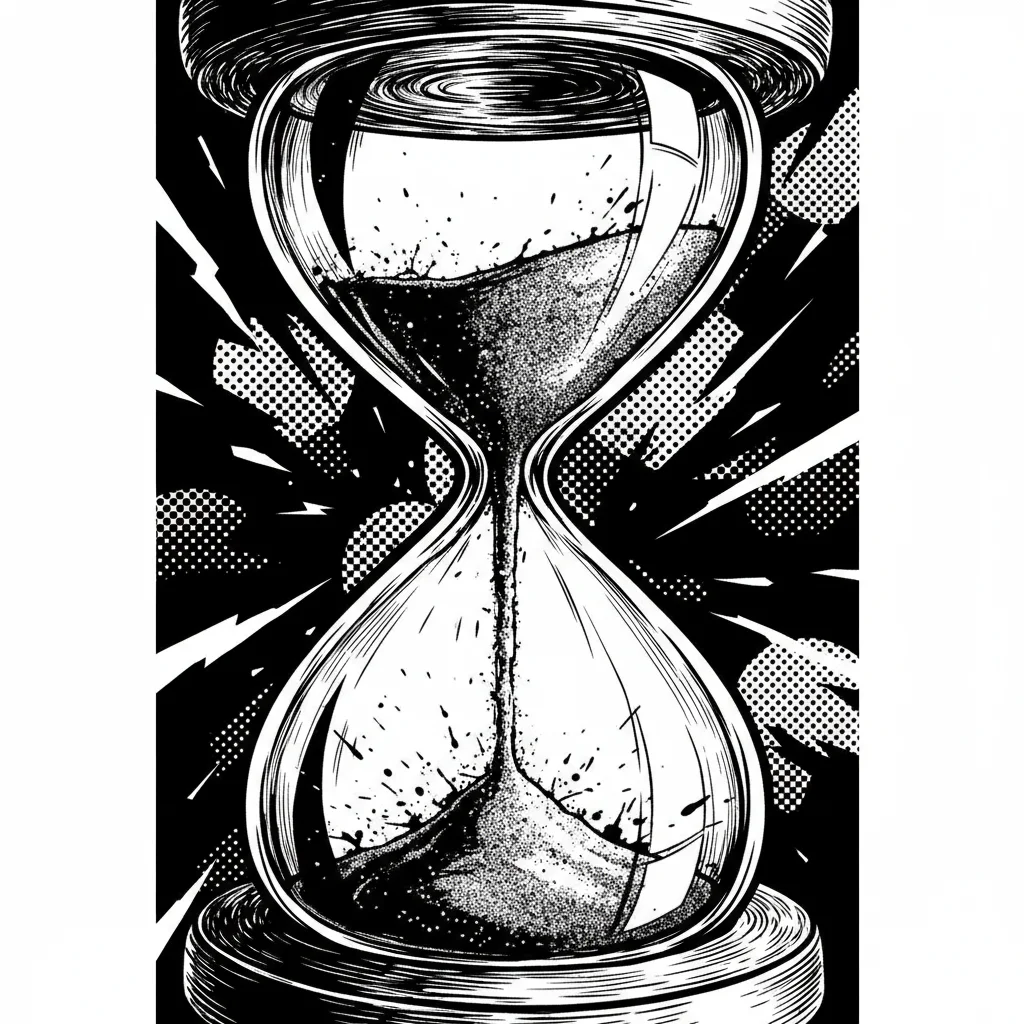

Understanding the Basics of Time Ellipses
The Fundamental Role of Ellipsis in Storytelling
Temporal ellipsis is not just a simple shortcut; it is a powerful narrative tool that allows for the condensation of time, the highlighting of important passages, or the creation of dramatic breaks. It helps maintain a sustained pace and avoid lengths that could bore the reader. It is essential for building a dynamic narrative.
Identifying Key Moments for Ellipsis
- Significant passage of time: Major events that transform characters or the world
- Parallel montage: Showing simultaneous actions in different locations
- Jumps between generations: Connecting events over long periods
- Avoiding redundant scenes: When an action is repeated or brings nothing new
Different Types of Ellipses
- Short ellipsis: A jump of a few minutes or hours, often to move from one scene to another
- Medium ellipsis: A jump of days, weeks, or months, to show evolution or change
- Long ellipsis: A jump of several years, even decades, for sagas or historical narratives
Visual and Narrative Impact of Ellipsis
A well-placed ellipsis can enhance mystery, create anticipation, or emphasize transformation. It must be supported by visual cues or dialogue that guide the reader through the time jump.
Ready to Structure Your Narrative
Discover how to organize your ideas and pages for successful publication. Explore Creation Tools
Explore Creation ToolsTechniques for a Smooth Time Transition
The Mechanisms of Temporal Transition
The key to a successful ellipsis lies in the clarity of the transition. Without adequate guidance, the reader risks getting lost, questioning the consistency of the story. It is essential to provide visual and narrative cues that signal the passage of time, even if it is significant.
To create their manga effectively, the author must anticipate the questions the reader will ask after a time jump. Each ellipsis requires careful preparation beforehand and confirmation afterward to ensure that the information is conveyed clearly.
Visual and Narrative Indicators
Changes in environment, costumes, or the appearance of new technological elements can signal a time jump. Dialogues can also refer to past events or specific periods. The use of transition panels, changes in graphic style, or voice-over narration can also help mark the passage of time effectively and aesthetically.
Visual techniques include crossfades between panels, universal symbols of passing time (seasons, day/night cycles), and cultural markers specific to the manga's universe. These elements enhance immersion while naturally guiding temporal understanding.
Refine Your Storytelling
Learn to master transitions and pacing to captivate your readers. Tips for Authors
Tips for AuthorsAvoiding Pitfalls and Maintaining Consistency
Temporal ellipses often create confusion. This can occur when landmarks are insufficient, or when the jump is too abrupt and poorly justified. A lack of consistency in character or plot development after an ellipse can also detract from the reader's experience.
| Consistency Criterion | Implementation Detail |
|---|---|
| Character Development | Ensure continuity in their physical and psychological development |
| Environmental Changes | Describe or show the transformations of important locations |
| Historical and Social Context | Maintain consistency of overall events and social norms |
| Technology and Fashion | Adapt visual elements to reflect the elapsed period |
| Interpersonal Relationships | Show how the bonds between characters have evolved |
To maintain consistency, it is crucial to accurately document the changes that occurred during the ellipse. A detailed internal timeline, even if not fully revealed to the reader, helps the author maintain a clear vision of their story's evolution. Foreshadowing or flashbacks can be used judiciously to fill in gaps and enhance reader comprehension.
Take It to the Next Level
Use smart solutions to speed up your creative process. Discover Bulle.ai
Discover Bulle.aiConclusion
Mastering time ellipses is an essential skill for any manga author wishing to create engaging and coherent stories. By understanding their role, using clear transitions, and avoiding common pitfalls, you can turn these time jumps into true narrative assets. Remember that each ellipse must serve your story, by strengthening its pacing, emotional impact, and character depth. Experiment with these techniques to find the perfect balance and offer your readers an unforgettable reading experience. Time management is a subtle art, but with practice and a good understanding of narrative mechanics, you will master this powerful tool to bring your manga universes to life.