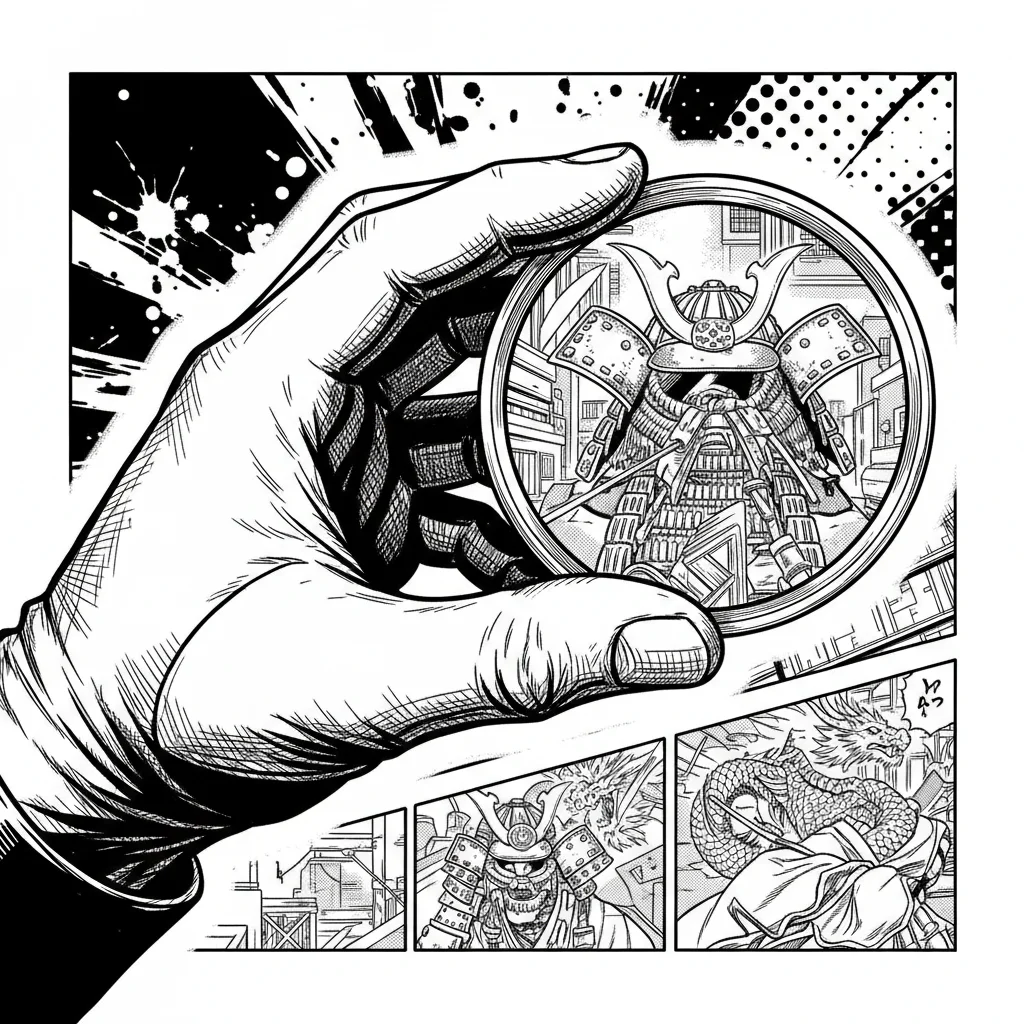

The Voices of Manga: Narrator and Focalization
The Omniscient Narrator
The omniscient narrator possesses complete knowledge of the thoughts, feelings, and actions of all characters, as well as past, present, and future events. This perspective offers an overview and allows for the weaving of complex plots, revealing information that characters are unaware of, thus creating a form of dramatic tension.
Internal Focalization
With internal focalization, the narrative is filtered through the consciousness of a specific character. The reader only knows what this character knows, feels, and perceives. This creates strong identification and emotional immersion, but limits the overall understanding of the plot to the protagonist's experiences alone.
External Focalization
Here, the narrator acts as a neutral observer, describing events and actions without accessing the characters' thoughts or emotions. The reader must deduce motivations and feelings from dialogues and behaviors, which can generate suspense and a sense of realism.
The Witness Narrator
In this case, a secondary character, who is not the main protagonist, speaks to tell the story. Their perspective can be subjective, colored by their own experiences and biases, thus offering a unique and sometimes unexpected insight into events and other characters.
The Use of Flashbacks and Flashforwards
Flashbacks help to illuminate the present by revealing past events that explain current motivations or situations. Flashforwards foreshadow the future, creating anticipation and suspense about how these possible futures will unfold.
Structure Your Manga Story
Discover how to organize your ideas and build a solid plot for your next manga series.
Explore ToolsNarrative Techniques to Captivate the Reader
The Art of Suspense and Gradual Revelations
Mastering suspense involves dispensing information sparingly. It's about creating expectations in the reader, sowing subtle clues, and delaying important revelations to maintain engagement. Each turned page should bring its share of new questions or partial answers.
Playing on the unsaid and foreshadowing can amplify the sense of anticipation. The mangaka uses panel pacing and framing to guide the reader's gaze and attention, creating moments of tension where the reader holds their breath, awaiting the inevitable conclusion or the next surprise.
Building Dramatic Tension
Dramatic tension increases through the accumulation of obstacles, the escalation of conflicts, and the rising stakes for the characters. It is essential to gradually increase the pressure, confronting protagonists with increasingly difficult dilemmas and making the consequences of their failures more severe.
Alternating between calm moments and peaks of action, as well as using impactful dialogue, helps keep the reader on edge. Each scene should advance the plot and intensify the conflict, whether internal or external.
The Use of Silence and Ellipses
Silence in a manga is not an absence, but a powerful narrative tool. Moments of silence can emphasize emotion, contemplation, or unease. Ellipses, meaning omitted passages in time or space, force the reader to fill in the gaps with their imagination, making the story more personal and memorable.
These silences and ellipses can be more evocative than a long description, leaving a lasting impression on the reader's mind. They invite reflection and interpretation, thus enriching the reading experience.
Visual Rhythm and its Relationship with Text
The panel layout, the size and shape of the panels, as well as the density of dialogue and onomatopoeia, dictate the reading rhythm. Small, numerous panels accelerate the narrative, while large panels or entire pages can slow the tempo to emphasize a key moment or emotion.
Harmony between visuals and text is paramount. Text that is too dense in panels that are too small can make reading laborious, while a judicious balance allows the reader to be guided smoothly through the story, strengthening the emotional and narrative impact.
Character Evolution and Motivations
A captivating story often relies on the evolution of its characters. Showing how their experiences, successes, and failures transform their worldview and motivations is essential. Readers become more attached to a story when they see their heroes grow and change.
Well-constructed story arcs allow characters to overcome trials, question their beliefs, and achieve a new understanding of themselves and their surroundings. This transformation makes the story more human and resonant.
Refine Your Narrative Style
Learn how to use storytelling techniques to captivate your readers and make your manga unforgettable.
Writing TipsArtificial Intelligence at the Service of Manga Narration
How can AI help generate narrative ideas?
Artificial intelligence can be a formidable creative partner for brainstorming. It can propose original story concepts, suggest unexpected plot twists, or help develop complex narrative arcs by generating leads and variations on a given theme.
AI for ensuring visual and thematic consistency?
For long series, maintaining stylistic and thematic unity is a challenge. AI can analyze existing visual and narrative elements to propose consistent elements, thus helping to preserve the identity of your universe and avoid inconsistencies over the chapters.
AI in structuring a manga series project?
Planning a manga series project can be complex. AI can assist in creating detailed synopses, organizing narrative arcs, managing continuity between episodes, and even generating timelines to ensure logical plot progression.
AI for exploring narrative variations?
Before finalizing a scene or plot development, AI allows for rapid exploration of different options. It can generate variations of the same situation, propose alternative dialogues, or suggest different outcomes, thus offering a wide range of possibilities for refining your story.
Can AI replace the author's creative vision?
No, AI cannot replace the unique artistic vision, emotion, and intuition of a human author. It is a powerful assistance tool for unlocking creativity, exploring options, and optimizing the process, but the heart of the story, its soul, remains the prerogative of the creator.
AI at the Service of Your Creativity
Use artificial intelligence to generate ideas, explore variations, and structure your manga project.
Discover Bulle.aiConclusion
The choice of point of view and mastery of narrative techniques are fundamental to creating a captivating manga. By understanding how the narrator, focalization, and pacing influence the reader's perception, you can build more immersive and impactful stories. Artificial intelligence offers valuable tools for exploring these aspects, generating ideas, and structuring your project. Don't hesitate to experiment with these approaches to bring your stories to life and turn your passion into concrete pages.