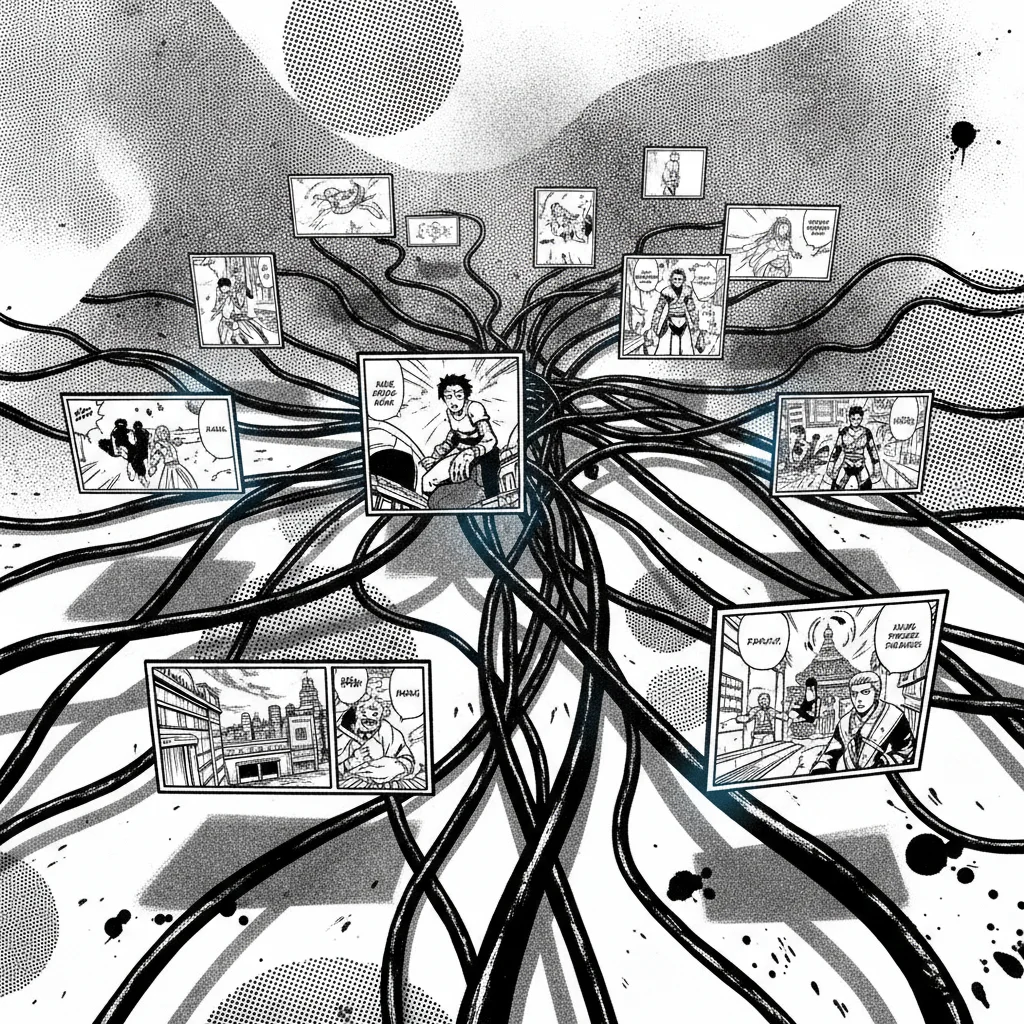

Understanding the Importance of Narrative Rhythm
The Perception of Time in Comics
In comics, time is not linear as in a film. The reader constructs their own perception of time by moving through panels and pages. The mangaka has the power to manipulate this perception, accelerating or slowing down the narrative at will. Good time management is essential to create an immersive experience.
The Pitfalls of Abrupt Transitions
Too sudden scene changes, poorly justified ellipses, or unexplained time jumps can disorient the reader. This can pull them out of the story and diminish the emotional impact of events. It is crucial to ensure that each transition is logical and serves the narrative.
The Impact on Reader Engagement
A well-controlled narrative rhythm keeps the reader on the edge of their seat. They anticipate, feel emotions, and feel invested in the story. Conversely, a jerky rhythm can lead to a loss of interest and abandonment of reading. To create a memorable manga, narrative flow is a powerful lever.
Optimize Your Narrative Rhythm
Discover how to structure your temporal transitions for a captivating story.
Explore TechniquesStructuring Your Temporal Transitions
Every transition is an opportunity to guide the reader's eye and mind. Don't waste it.
The key to a fluid rhythm lies in how you manage the passage of time between panels and pages. It's not just about showing what's happening, but also about making the reader feel time passing, or conversely, compressing it to create tension.
Use clear visual cues, such as changes in scenery, lighting, or actions that suggest the passage of time. Sometimes, a simple change in posture or expression can be enough to mark an ellipsis.
Anticipation and information withholding are powerful tools. Let the reader guess what happened or what is about to happen. This keeps them engaged and strengthens their connection to the story.
Master Your Panel Pacing
Learn to use ellipses, flashbacks, and other methods to smooth out your storytelling.
Improve Your PacingTechniques for Smoothing Panel Pacing
These techniques, when mastered, transform a simple succession of panels into a dynamic and engaging reading experience. Consider how each visual and narrative element contributes to your reader's perception of time.
| Technique | Description | Impact on Pace |
|---|---|---|
| Temporal Ellipses | Skipping moments to get to the core. | Speeds up the narrative, maintains tension. |
| Parallel Editing | Alternating between two scenes happening simultaneously. | Creates suspense, highlights contrasts. |
| Flashbacks/Flashforwards | Inserting memories or projections. | Enriches the narrative, reveals key information. |
| Action Repetition | Showing an action unfolding over a short period. | Emphasizes the importance of a moment, creates a slow-motion effect. |
Ready to Create Your Series?
Innovative tools can help you structure your stories and bring your manga project to life.
Discover Bulle.aiConclusion
Mastering temporal transitions and narrative rhythm is an art that distinguishes a captivating manga from a mere succession of images. By applying the principles of fluidity, judiciously choosing your pacing techniques, and paying attention to visual cues, you can transform the reading experience of your works. Remember that every page, every panel, contributes to the overall immersion. To go further in optimizing your creative process and structuring your stories, discover how innovative tools can assist you. Ready to bring your series to life with impeccable storytelling and to create a manga that leaves a lasting impression?