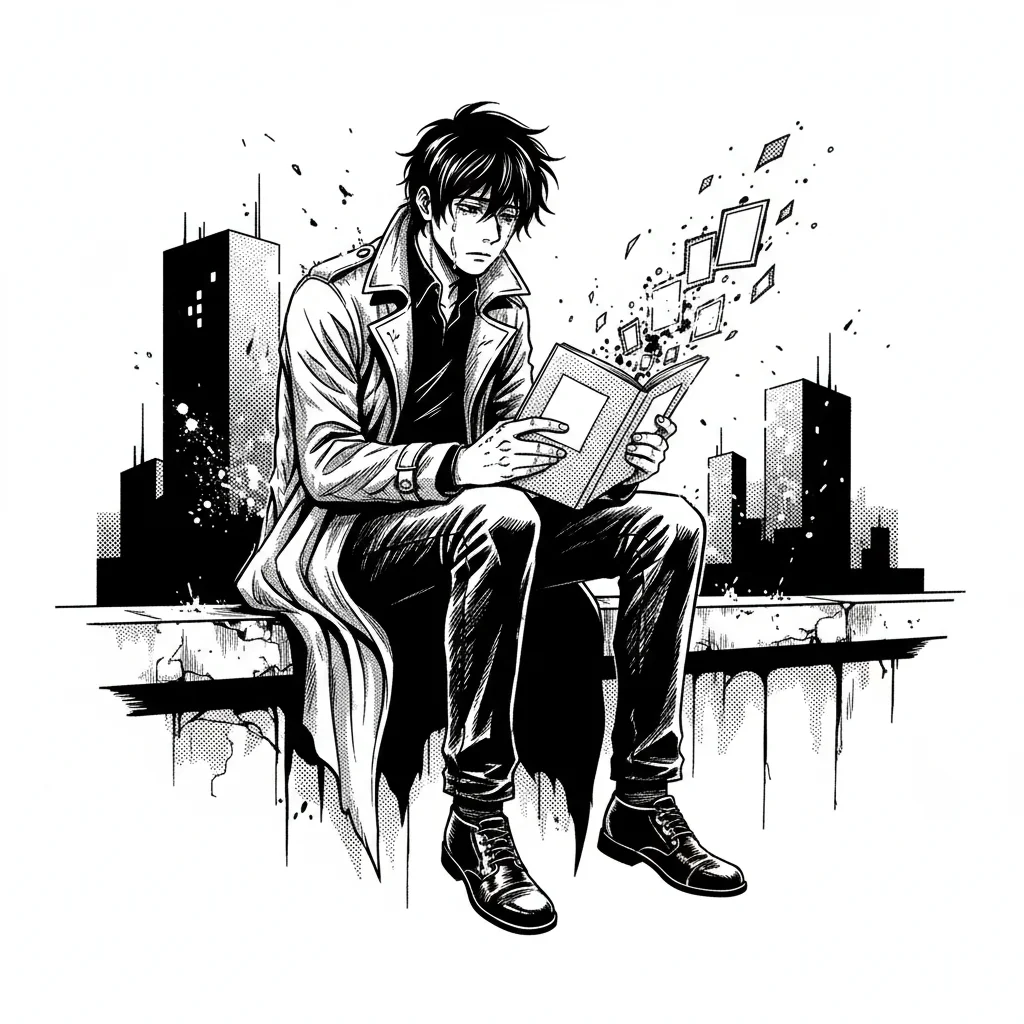

The Importance of Pacing in Reader Immersion
Tempo: More Than Just a Succession of Panels
The rhythm of a manga is not just about the simple juxtaposition of panels. It is a subtle orchestration that guides the reader's sensory and emotional experience. Good tempo management allows for the creation of manga with moments of tension, suspense, contemplation, or action, each having a specific impact on audience engagement. Inappropriate pacing can turn a potentially strong scene into a soporific passage or, conversely, make an action sequence confusing and illegible.
The Domino Effect of Timing Errors
Every decision regarding pacing and the temporal placement of events has repercussions on the entire work. Too long an introduction can cause initial interest to wane, while too rapid a resolution can leave the reader unsatisfied. These errors accumulate, creating a frustrating reading experience that can lead to abandonment. It is therefore crucial to consider each narrative element in its temporal context when you want to create a manga.
How the Reader Perceives Rhythm
The reader does not perceive time in the same way as the author. They are influenced by the density of the pages, the size of the panels, the presence or absence of dialogue, and the very nature of the events depicted. Understanding this subjective perception is key to adjusting the rhythm and ensuring that the story unfolds at the desired tempo, thus maintaining constant immersion.
Structure Your Story
Learn to master pacing and timing for impactful storytelling. Avoid pitfalls that make your readers quit.
Discover the TechniquesThe 5 Timing Mistakes That Drive Your Readers Away
Step 1 — The Introduction That's Too Long or Too Short
An introduction that drags on unnecessarily can discourage the reader before the plot even really gets going. Conversely, an introduction that's too rushed doesn't allow time to connect with the characters or understand the stakes, thus breaking immersion from the very first pages.
Step 2 — The Slow-Paced Plot Development
When events unfold without clear progression or obstacles are resolved too easily, the reader can feel weary. A lack of tension or twists harms interest and gives the impression that the story is stagnating.
Step 3 — Poorly Handled Time Ellipses
Abrupt or poorly explained jumps in time can disorient the reader, who loses the thread of the narrative or doesn't understand the evolution of characters and situations. This harms narrative coherence.
Step 4 — Misplaced Climax Moments
Placing a high point too early in the story can break the dynamic, while a climax that's too late can leave the reader unsatisfied, having already lost some of their interest. The timing of the climax is essential for maintaining tension.
Step 5 — The Rushed or Unfinished Resolution
A botched ending, where narrative arcs are not tied up or questions are left hanging for no valid reason, leaves an impression of incompleteness and disappointment, harming the overall impact of the work.
Optimize Your Creative Flow
Transform your ideas into captivating pages. Discover how good timing management enhances engagement.
Improve Your WritingFixing Timing for a Captivating Manga
- Visual Rhythm
- This refers to how the succession of panels and pages guides the reader's eye and influences their perception of the passage of time in the story. An alternation of wide and close-up shots, dense and sparse panels, helps modulate this rhythm for a better manga creation experience.
- Narrative Acceleration
- The moment when the plot intensifies, events unfold more rapidly, increasing tension and reader interest. This can be marked by smaller, more numerous panels, a key technique for energizing the narrative.
- Narrative Slowdown
- A technique used to stretch the time perceived by the reader, often to emphasize an emotion, contemplation, or important scene. Larger panels, silent pages, or detailed descriptions can serve this purpose.
- Ellipsis
- The use of ellipses or pauses in the narration to create suspense, allow the reader to anticipate what's next, or mark a change in time or place without detailing the transition, an effective method for managing time.
- Climax
- The story's peak, where tension is at its highest and the main conflicts reach their resolution. A well-placed climax is essential for maintaining reader engagement until the end.
- Denouement
- The final phase of the narrative, where the consequences of the climax are explored and the last threads of the plot are tied up. A satisfying denouement ensures a coherent and memorable conclusion for the reader.
Take It to the Next Level
Ready to seriously structure your manga project? Explore the tools that help you bring your vision to life.
Explore Bulle.aiConclusion
Mastering narrative timing is an essential skill for any manga author who wants to captivate their audience. By avoiding these five common mistakes and applying the principles of well-thought-out pacing, you will significantly increase the chances that your readers will remain engaged from the beginning to the end of your story. Remember that the consistency and fluidity of your narration are your best allies in transforming an idea into a memorable work and creating a manga that leaves a lasting impression.