
The Visual Impact of Onomatopoeia and Speech Bubbles
The Role of Onomatopoeia in Narrative Dynamics
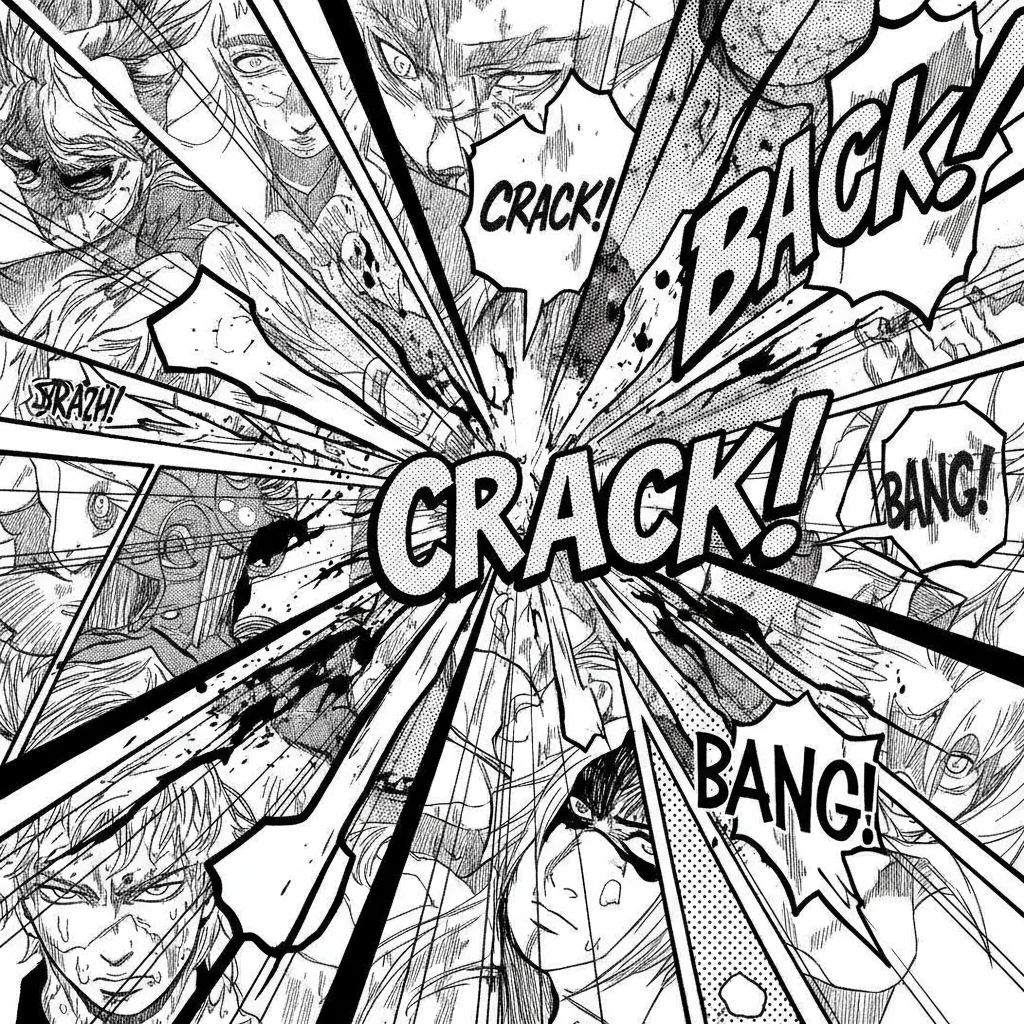
Onomatopoeia transcends its function of simple sound transcription to become a graphic element in its own right. It injects immediate energy into the scene: a striking "BOOM" transforms a static explosion into a sensory impact, while a discreet "SWISH" subtly accompanies a rapid movement. Their graphic integration requires precise technical mastery: size, font, color, and positioning must serve the dramatic intensity without compromising overall readability.
The Primary Function of Speech Bubbles
Bubbles constitute the main interface between characters and the reader. Their formal diversity meets specific narrative needs: round bubbles for standard dialogues, jagged shapes for shouts, dotted outlines for inner thoughts, or rectangular bubbles for narration. The space they occupy in the panel directly influences reading rhythm and the hierarchy of visual information.
Criteria for Choosing Between Onomatopoeia and Bubbles
The nature of the action determines the optimal typographical choice. Onomatopoeia excels for punctual noises, physical impacts, or sound atmospheres, creating immediate sensory immersion. Bubbles are essential for verbal exchanges, inner monologues, or essential narrative information. The balance between these elements shapes the visual identity of your work and naturally guides the reader's eye.
Optimize Your Typographic Choices
Discover how artificial intelligence can refine the impact of your onomatopoeia and speech bubbles for more impactful and professional manga storytelling.
Explore AI ToolsMastering the Art of Typographic Integration
Step 1 — Analyze the Scene and Narrative Intent
Each panel has a specific narrative purpose that determines the typographic choice. Identify the dominant element: physical action, emotion, dialogue, or description. This preliminary analysis guides the choice between onomatopoeia for impactful moments or speech bubbles for verbal developments. Artificial intelligence can generate creative alternatives to enrich this initial reflection.
Step 2 — Choose the Right Format for Onomatopoeia
The typography of onomatopoeia visually conveys sound intensity. Vary size, thickness, and shape according to the desired effect: massive letters for explosions, thin typography for whispers, deconstructed shapes for chaotic sounds. Color adds an extra dimension, red for violence, blue for coolness, yellow for electricity.
Step 3 — Adapt the Speech Bubble to Tone and Content
The shape of the speech bubble instantly communicates the emotional register of the message. Sharp outlines for calm affirmations, irregular edges for agitation, multiple tails for group conversations. The size adjusts to textual volume and narrative importance, creating a clear visual hierarchy in the overall composition.
Step 4 — Test Readability and Impact
Typographic effectiveness is measured by the test of the eye. Ensure that each element remains readable at different distances and that the composition maintains its balance. Onomatopoeia must be immediately decipherable, and speech bubbles perfectly integrated into the visual flow. Artificial intelligence tools facilitate the generation of iterations to optimize these technical aspects.
Structure Your Project Seriously
Transform your passion into a concrete project with specialized tools designed to support independent manga creators in their development.
Discover the PlatformCombining AI and Creativity for Informed Choices
Artificial intelligence is revolutionizing the approach to manga creation by offering sophisticated creative assistants. These tools analyze your typographic choices, suggest consistent alternatives, and maintain visual harmony throughout your project. To create manga with AI, leverage these rapid iteration capabilities while preserving your personal artistic vision.
AI does not replace creative intuition but amplifies your capacity for experimentation and typographic optimization.
Specialized platforms offer structured environments to test the visual impact of your decisions. They allow for instant visualization of the effects of different typographic approaches and fine-tuning of narrative balance. This technical assistance frees up creative time to focus on the essence of your story.
Every typographic choice constitutes a narrative language that must serve the reader's emotion and understanding.
The alliance between human artistic sensibility and the computational power of AI opens up unprecedented creative horizons. You retain total aesthetic control while benefiting from valuable technical assistance to refine the quality and consistency of your visual storytelling.
Perfect the Readability of Your Panels
Master the harmonious integration of typographic elements to offer a fluid and immersive reading experience to your readers.
Storytelling TipsConclusion
Mastering onomatopoeia and speech bubbles is a fundamental pillar of effective manga storytelling. These typographic choices determine the reading flow, emotional impact, and clarity of your narrative. Experimentation guided by artificial intelligence enriches your creative palette without compromising your personal artistic vision. Utilize these tools to refine your creations and develop a distinctive visual signature. Transform your passion into a structured project with resources tailored for independent creators.