
The Illusion of Narrative Density
The Desire to Show More
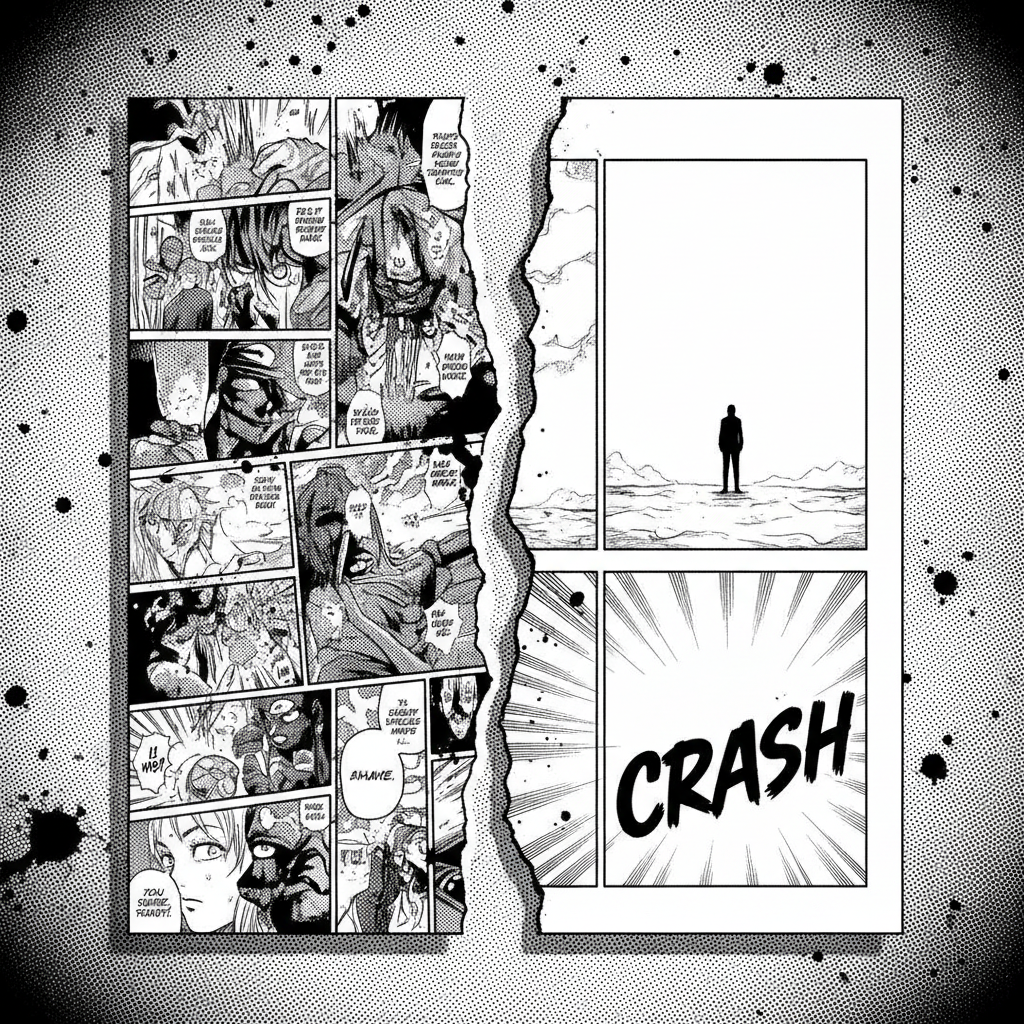
Why do beginner authors overload their panels? The influence of abundant visual styles and the fear of empty space often push them to want to show as much as possible. There is frequent confusion between the quantity of information and the quality of the reader's experience.
The Impact on Readability and Comprehension
An overly full panel struggles to communicate its main message. This leads to visual fatigue for the reader and a loss of attention. The risk is drowning key moments under a flood of superfluous information, making the reading less fluid.
The Opposite Effect on Tension
When action accumulates without pause, suspense erodes. The importance of rhythm and visual silence is crucial for building anticipation. Scenes where visual restraint enhances the drama are more impactful than those overflowing with elements.
Optimize Your Paneling
Learn to structure your pages to maximize impact and tension. Good space management is essential.
Discover the TechniquesThe Art of Visual Breathing Room
Compare approaches to understanding the impact of panel density on narrative tension.
| Approach | Description | Impact on Tension | Creator Tip |
|---|---|---|---|
| Overcrowded Panels | Multiple actions, dialogues, visual effects in a single panel. | Decreases tension through saturation, fatigues the reader. | Prioritize one key element per panel. |
| Spacious Panels | One main action or dialogue element, significant white space. | Increases tension through anticipation, focuses attention. | Let the panel breathe, use emptiness to create suspense. |
| Visual Rhythm | Alternation of fast and slow panels, wide and close-up shots. | Creates waves of intensity, maintains interest and emotion. | Vary panel size and composition to guide the reader. |
| Visual Silence | Panels without dialogue or major action, focused on an expression or detail. | Allows the reader to feel the emotion, anticipate danger or resolution. | Use silence to emphasize a feeling or atmosphere. |
Master Visual Breathing Room
Use emptiness and simplicity to build captivating suspense. Your readers will thank you.
Deepen Your UnderstandingTechniques for Increased Tension Through Simplicity
- The Power of the Close-Up
- Focusing on a facial expression or a crucial detail can amplify emotion and suspense far more than an overloaded action scene.
- The Use of Negative Space
- White space around a character or object can suggest impending threat, deep loneliness, or unbearable anticipation.
- Minimalist Panel Layout
- Reducing the number of panels for a key sequence forces the reader to imagine what comes next, increasing their engagement and tension.
- Streamlined Dialogue
- Short, impactful lines punctuated by silence create a more tense atmosphere than verbose and dense exchanges.
- Focusing on One Element
- Within a panel, choosing to show only one important thing directs the reader's attention and maximizes its impact.
Ready to Create Your Manga?
Transform your ideas into impactful pages. Tools like Bulle.ai can help you structure your project seriously.
Explore Bulle.aiConclusion
As we've seen, density doesn't always equate to intensity. By mastering the art of visual breathing room, using emptiness, and streamlining your pages, you can create much more powerful narrative tension. Don't be afraid to let your panels breathe; it's often in these moments of apparent calm that suspense reaches its peak. Keep experimenting and refining your art to captivate your readers beyond mere action, and consider how these techniques apply when you decide to create your manga.