Three elements, a single message
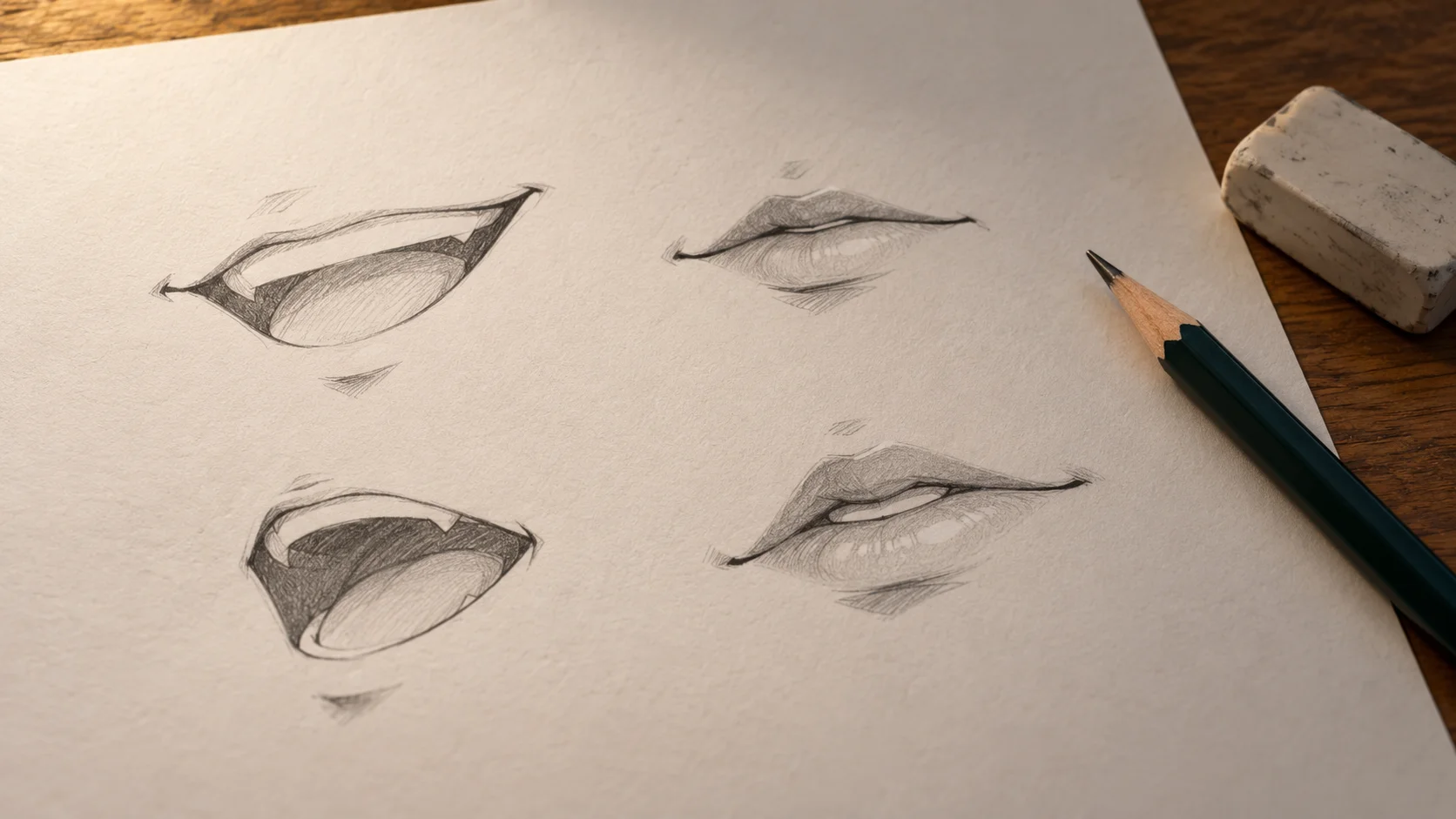
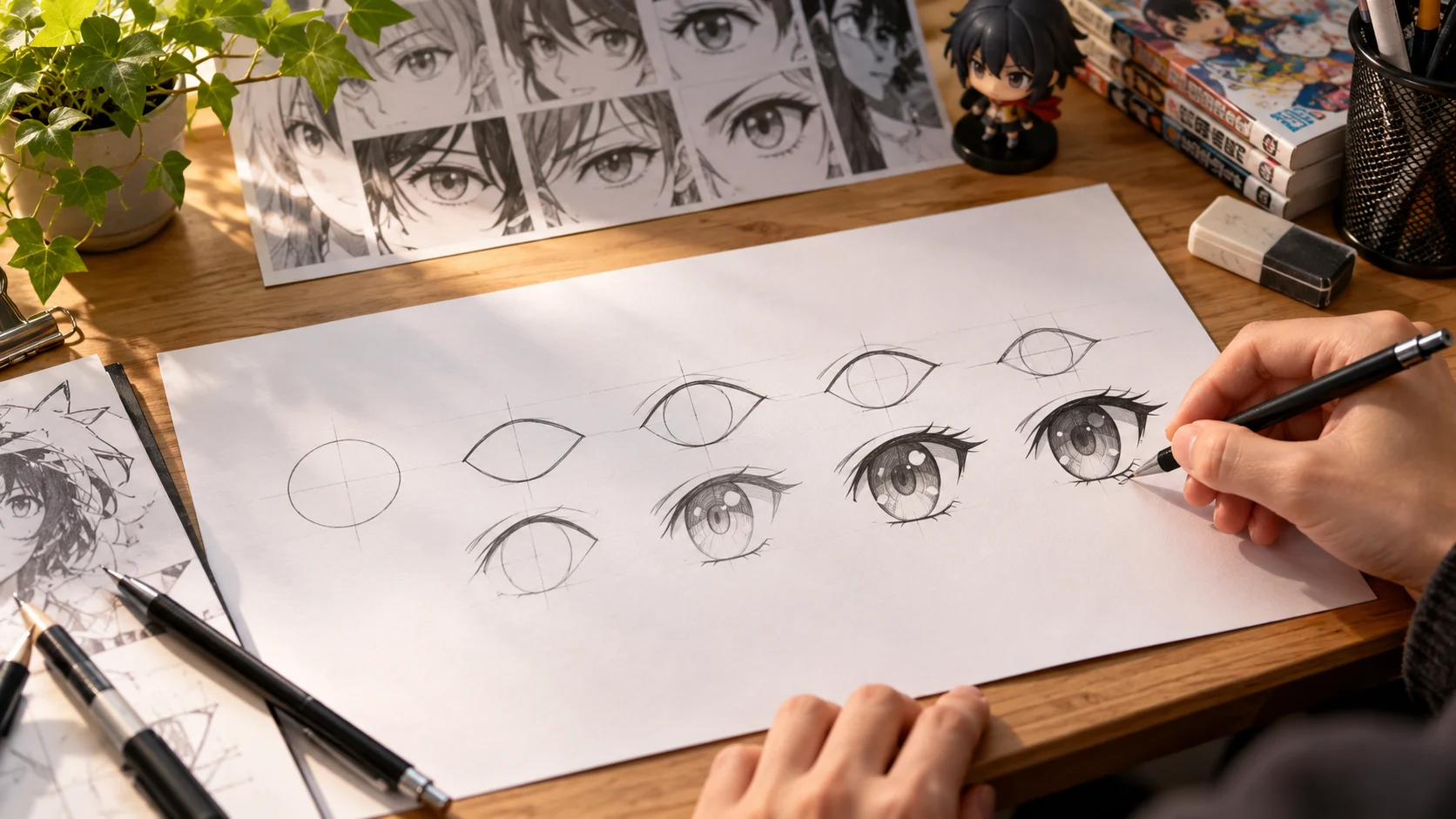
Expressions rely on fixed landmarks. The eye line is placed in the middle of the head, often a little below that in manga. Between the two eyes, you leave the width of one eye. The mouth is placed under the nose. These landmarks are detailed in the article on manga eyes and in the one on manga mouth.
Once these landmarks are set, the expression hardly moves them at all. It distorts three things:
- the eyebrow goes up, down, or tilts;
- the upper eyelid, the thick arch that frames the gaze, opens or closes;
- the mouth chooses one of its shapes: neutral, smiling, open, or sad.
Change one of these three elements at a time, never all three at random.
Joy, sadness, anger: the three basics
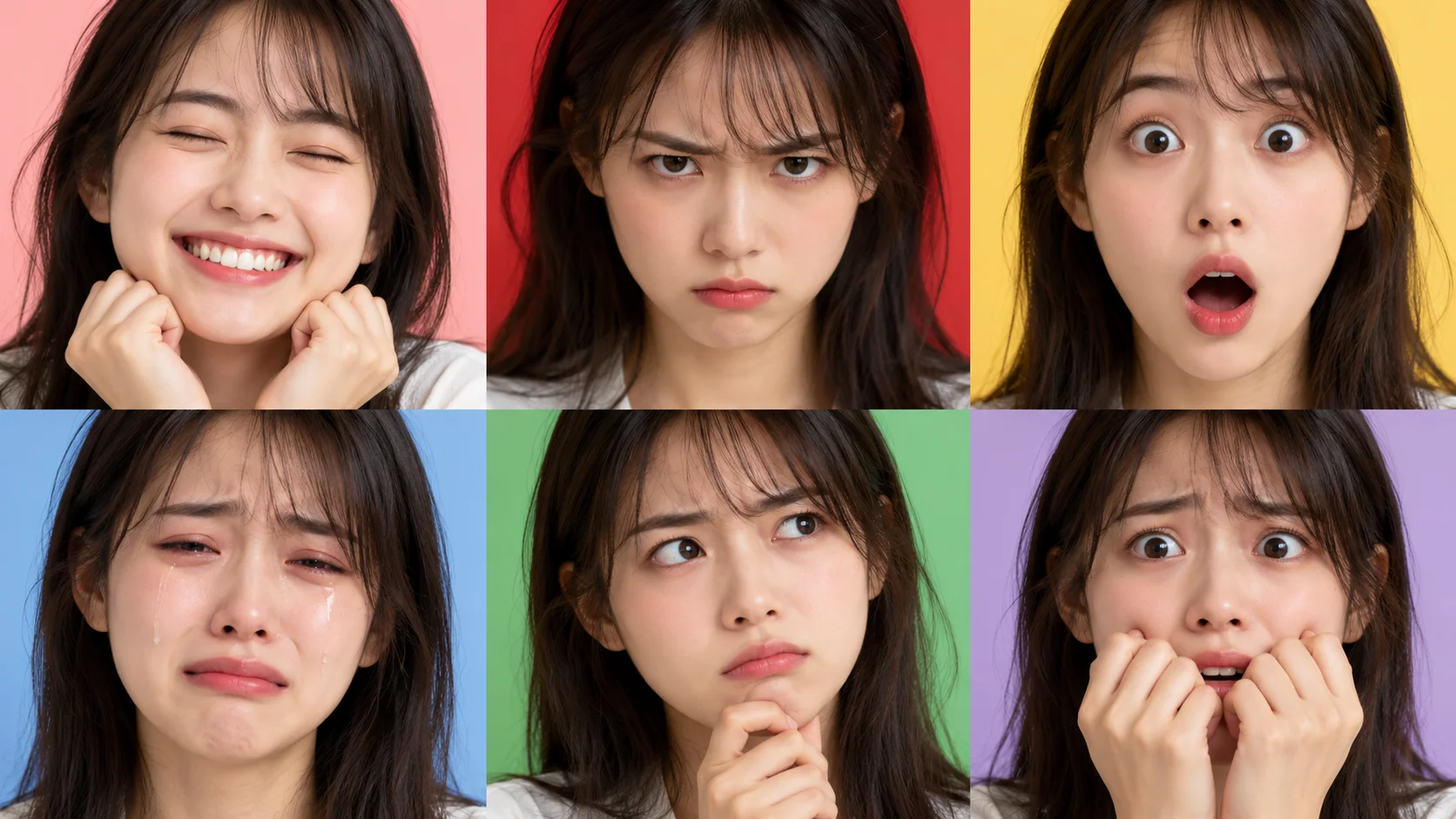
Joy. Eyebrows raised and relaxed, upper eyelid slightly lifted, mouth in a smile. For open joy, the mouth opens and the eyes close into upward arcs.
Sadness. The eyebrows slope upward at the center of the face, as if coming together at an angle. The eyelid drops, the iris stays low, and the mouth takes on its sad, small, and tightened shape.
Anger. The eyebrows move down and slope downward at the center. The upper eyelid lowers and thickens, which hardens the gaze. The mouth closes in a tight line or opens in a grimace.
These three emotions are enough for an entire scene. The others derive from them.
Surprise, fear, embarrassment: the variants
The surprise. Eyebrows raised very high, eyelids pulled up as high as possible, mouth open and round. This is one of the few cases where the white appears above the iris.
The fear. Same base as surprise, but the eyebrows slant down as in sadness and the iris shrinks. The mouth opens crookedly. The visible white around the iris is reserved for these strong emotions (fear, shock): otherwise, an iris cut off by the eyelid gives a calmer look.
The embarrassment. One eyebrow goes up, the other stays down, the mouth is crooked and the gaze looks away to the side. It is an asymmetrical expression, making it harder to maintain consistently from one panel to the next.
Disagreements that ruin a face
A smile with angry eyebrows creates a threatening character, not a happy one. Sometimes this is intentional. Often it is a manufacturing error.
- Joyful mouth, drooping eyelid: the character seems tired or fake.
- Angry eyebrows, full and wide-open iris: the expression reads as surprise.
- Strong expression on all elements at the same time: the panel becomes noisy. Save the exaggeration for a single element, the most telling one.
The test is simple: cover the mouth with a finger. If you can still read the emotion in the eyes and eyebrows, the combination works.
Practicing without losing character identity
To practice, draw the same face six times, using the same light pencil guidelines, and change only the eyebrows, eyelids, and mouth. This expression sheet becomes a reference that you can refer to for every panel, which prevents the character's face from changing from one chapter to the next.
Emotion is also conveyed through posture: a lowered head or closed shoulders confirm what the face is saying. This subject is covered in the article on body emotions.
If you want to see your expressions on a complete panel before drawing each panel by hand, Bulle.ai generates pages from a script, with characters that you define. Credits never expire and a manga project consumes 500 of them.
Conclusion
A good manga expression relies on one rule: eyebrow, eyelid, and mouth say the same thing. Practice six emotions, one element at a time, and keep your expression sheet as a reference for the rest of your story.