
The Foundations of Visual Depth
Understanding Depth Perception
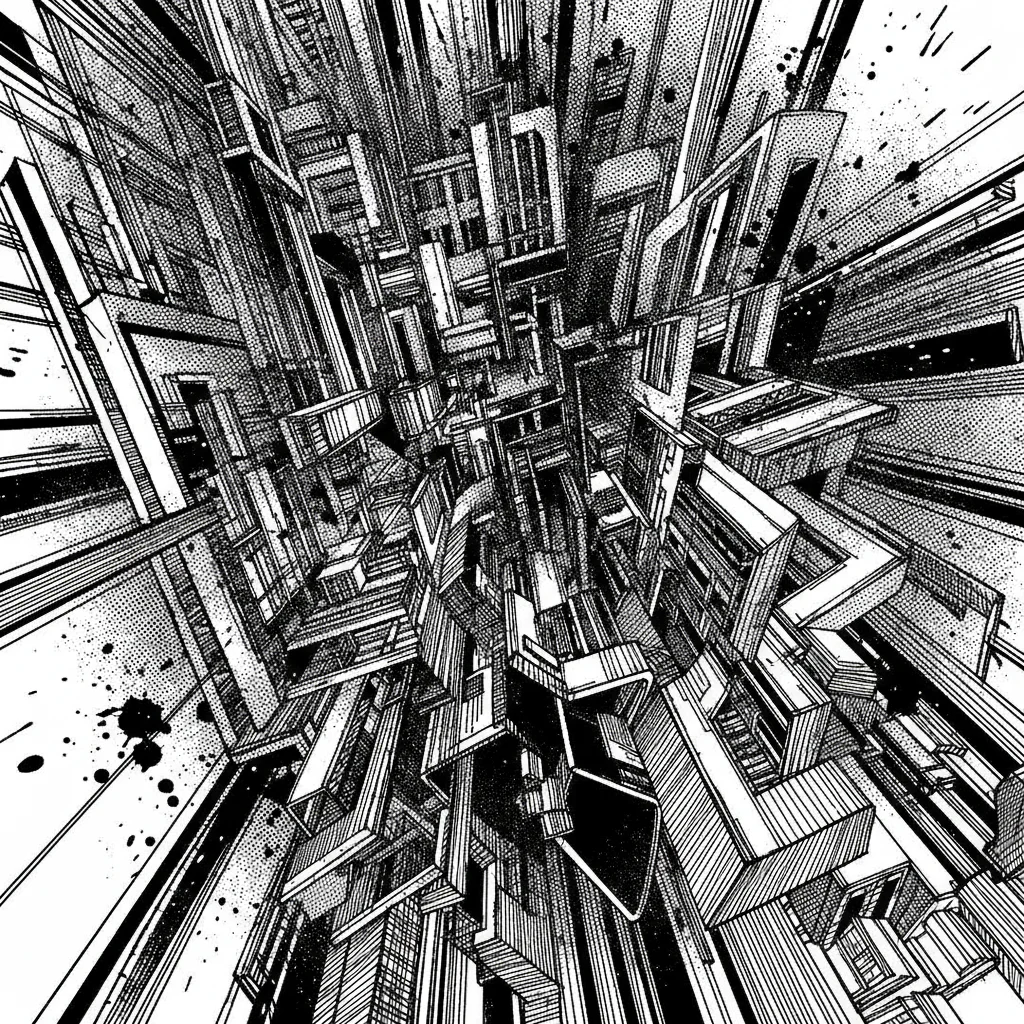
Depth perception in comics relies on several key principles. Perspective, whether linear (with vanishing lines converging to a point) or atmospheric (where distant elements are paler and less detailed), helps simulate three-dimensional space on a flat surface. The relative size of elements is also crucial: a smaller object will appear farther away than an identical, larger object. Finally, the interaction between light and shadow is fundamental to sculpting shapes and giving volume, thereby creating a sense of relief.
The Art of Foreground and Background
Clearly defining the different planes is an essential step. The foreground anchors the viewer in the scene, often with sharp details and a strong presence. The middle ground connects the foreground to the background, containing secondary elements or less central characters. The background, generally less detailed and blurrier, establishes the context and atmosphere, reinforcing the illusion of distance. Good management of these planes guides the reader's eye and structures the reading of the panel.
Negative Space as a Tool for Depth
Negative space, meaning empty areas or those with few elements, is a powerful tool for suggesting expanse and depth. Not filling every square centimeter of the panel allows the composition to breathe and avoids a feeling of being overwhelmed. The void can thus evoke a vast landscape, an immense sky, or a spacious room, contributing to the reader's immersion without visually overloading the scene.
Structure your ideas
Use layering to organize your panels and guide the reader. Think about tools to structure your project.
Discover Bulle.aiLayering Techniques for Structuring Information
- Foreground
- Elements closest to the viewer, often detailed and sharp. They serve as a visual hook and an anchor for the scene.
- Midground
- Located between the foreground and background, it often contains secondary elements or less central characters. Its sharpness can vary to indicate distance.
- Background
- The backdrop of the scene, generally less detailed and blurrier to emphasize the sense of depth. It establishes context and mood.
- Layering of elements
- Placing objects or characters in front of others to create an illusion of depth and volume, even in a two-dimensional space.
- Gradients and fog effects
- Used in the background to suggest distance and atmosphere, reducing the clarity of distant elements.
Speed up your creation
Mastering planes and depth can be optimized. Explore solutions to go faster.
Explore AI ToolsOptimizing Readability and Impact with Depth
The importance of clear composition cannot be overstated. Panel breakdowns and element placement should always serve the narrative. Thoughtful layering guides the eye without losing it, ensuring a smooth and enjoyable reading experience. Here's an overview of techniques to achieve this:
| Technique | Advantage | Risk |
|---|---|---|
| Sharp foreground, blurred background | Creates a strong sense of depth and highlights the main subject. | Can isolate the subject if poorly executed. |
| Use of silhouettes or partial elements | Suggests the presence of off-panel or distant elements, adding mystery and space. | Can make the scene confusing if elements are not clearly identifiable. |
| Visual hierarchy through size and position | Directs the reader's eye to the main points of interest. | Risk of creating an unbalanced composition if the hierarchy is unclear. |
| Value contrast (light/dark) | Emphasizes the separation of planes and gives volume to shapes. | Can become overwhelming if the contrast is too high across the entire page. |
Bring your manga to life
Transform your ideas into concrete panels. Solutions exist to support you in your project.
Realize your projectConclusion
Mastering layering is essential to bring your manga universes to life. By playing with planes, sharpness, and composition, you create dynamic and immersive scenes that captivate your readers. Remember that each added element must serve your story. Keep these principles in mind for your next panel and see the difference. If you're looking to structure your ideas and speed up your creative process for creating your manga, tools like Bulle.ai can help you realize your projects more effectively.