
From Idea to Concept – Clarify Your Vision
The Creative Spark: Finding and Refining Your Idea
Every great manga starts with an idea, an image, an emotion. Don't let it slip away! Jot down everything that comes to mind, even the most trivial fragments. Then, work on refining that spark: ask yourself questions. What is the main theme? What atmosphere do you want to create? What message do you wish to convey?
Defining the Heart of Your Story: The Pitch and Synopsis
Once your idea is clearer, condense it into a compelling pitch: one or two sentences that summarize the essence of your story. Then, develop a more detailed synopsis, outlining the main plot points, main characters, and resolution.
Understanding Your Target Audience and Genre
Who is your manga for? Children, teenagers, adults? What genre are you aiming for: shonen, shojo, seinen, josei, slice of life, fantasy, science fiction? Knowing your audience and genre will help you adapt your style, tone, and themes.
Creating a First Draft of Main Characters
Who are the heroes of your story? Give them an identity, motivations, flaws, and strengths. Even a quick sketch will help bring your universe to life and make your narrative more engaging.
Refine Your Idea
Transform your initial concept into a solid synopsis to lay the foundation for your manga.
Structure My StoryStructuring Your Story for the First Page
Step 1 — Determine Your Story's Starting Point
Choosing the precise moment where your narrative begins is crucial. It's about finding the instant that will immediately plunge the reader into action or mystery, without requiring lengthy exposition.
Step 2 — Establish Immediate Stakes
What is at stake for your characters from the very first pages? Defining these stakes creates narrative tension that compels the reader to want to know what happens next.
Step 3 — Outline Key Initial Interactions
How will your main characters interact for the first time? These initial exchanges should reveal their personalities and lay the foundation for their relationships.
Step 4 — Set the Stage for the Main Conflict
Even if the major conflict doesn't erupt immediately, its beginnings must be subtly introduced. This gives your story a clear direction from the outset.
Step 5 — Visualize the First Striking Scene
Imagine the very first strong image of your manga. What does the reader see? What is happening? This vision will guide the creation of your first pages.
Design Your Universe
Define your characters and the stakes of your story to captivate your future readers.
Develop My CharactersDrawing the First Panels – From Theory to Practice
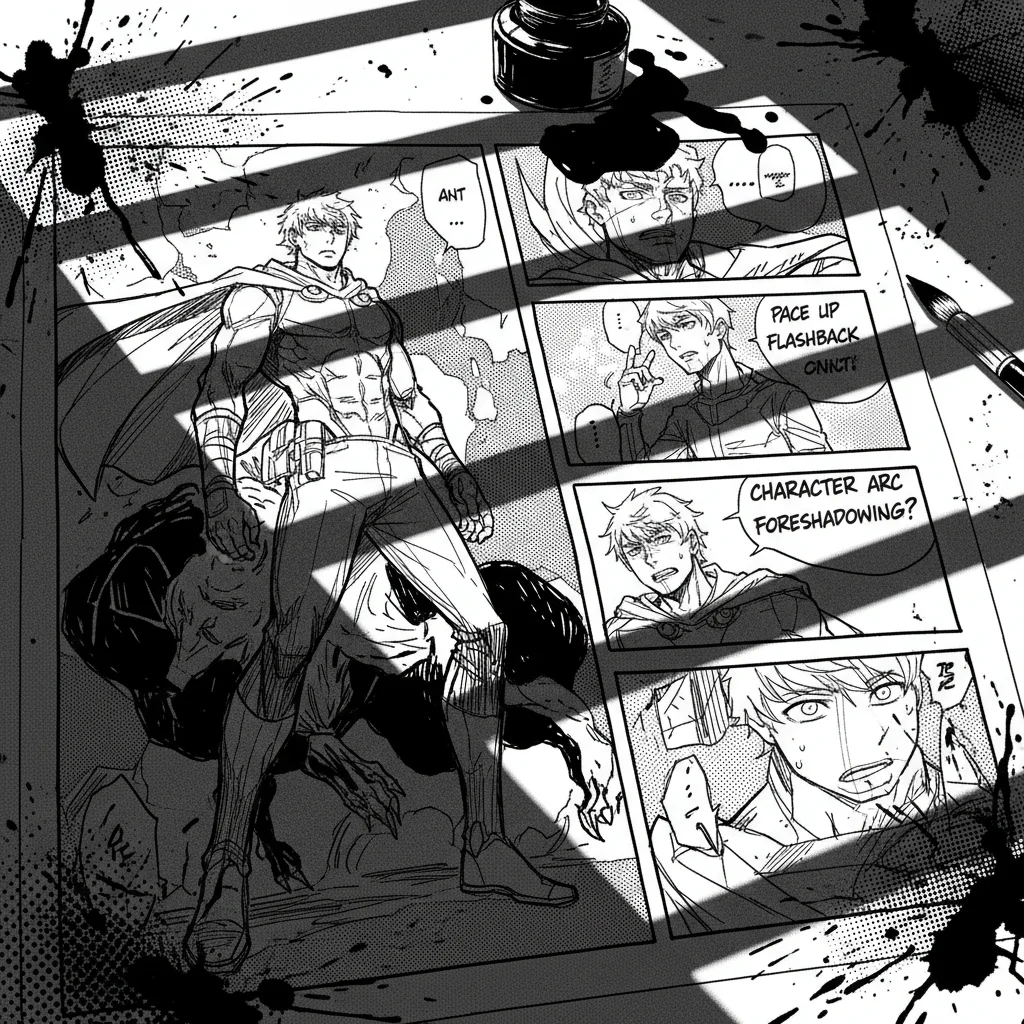
Once your narrative structure is outlined, it's time to move on to drawing. The way you present your visual and textual information in these first panels is crucial.
The first panel is a promise to the reader. It should be intriguing enough to make them turn the page, but not so complex as to discourage them.
The pacing of the panels, the framing, and the graphic style should be consistent with the atmosphere you want to create. Don't hesitate to make drafts to test different approaches.
The use of artificial intelligence can help generate layout ideas or character variations, but the mangaka's creative eye remains indispensable for bringing the story to life.
Also, consider the readability of the text and how the speech bubbles integrate with the image. Good visual composition guides the reader's eye through the story effortlessly.
Take Action
Ready to bring your manga to life? Discover how to structure your project seriously.
Build My Project SeriouslyConclusion
Starting a manga can seem like a daunting challenge, but by following a structured approach, you can transform your idea into a concrete and exciting project. From clarifying your vision to implementing the first pages, every step counts. Remember that the first panel is your gateway to your readers' world. Ready to take the next step and seriously structure your series project?